
Essex County Country Club
Alex Elias

Courtesy of LinksGems (@linksgems)
Founded in 1887, Essex County Country Club is New Jersey’s oldest country club. Originally designed by Alexander Findlay, the club moved to its present-day location in West Orange, NJ, in 1918, where the course was designed by A.W. Tillinghast—widely noted as a springboard for his career, leading to his later work at San Francisco Golf Club and Winged Foot Golf Club.
Redesigned in 1925 amid the booming Golden Age of golf architecture by Seth Raynor, the completion of the course was overseen by Charles Banks following Raynor’s death. In 2004, the club continued its tradition of working with up-and-coming architects by hiring Gil Hanse to create a long-term master plan, which was eventually carried out twenty years later.
“We’re extremely fortunate to have the names of Tillinghast, Raynor, and Banks associated with the club,” said Don McCabe, Head Golf Professional at Essex County Country Club. “Now, with Gil’s work, I don’t know if any other club can claim so many renowned architects linked to it.”
Though the back nine is often referred to as “the best back nine in New Jersey,” McCabe said, “Post-restoration, our members are just as proud of the front as they are of the back, which really speaks to Gil’s work.”
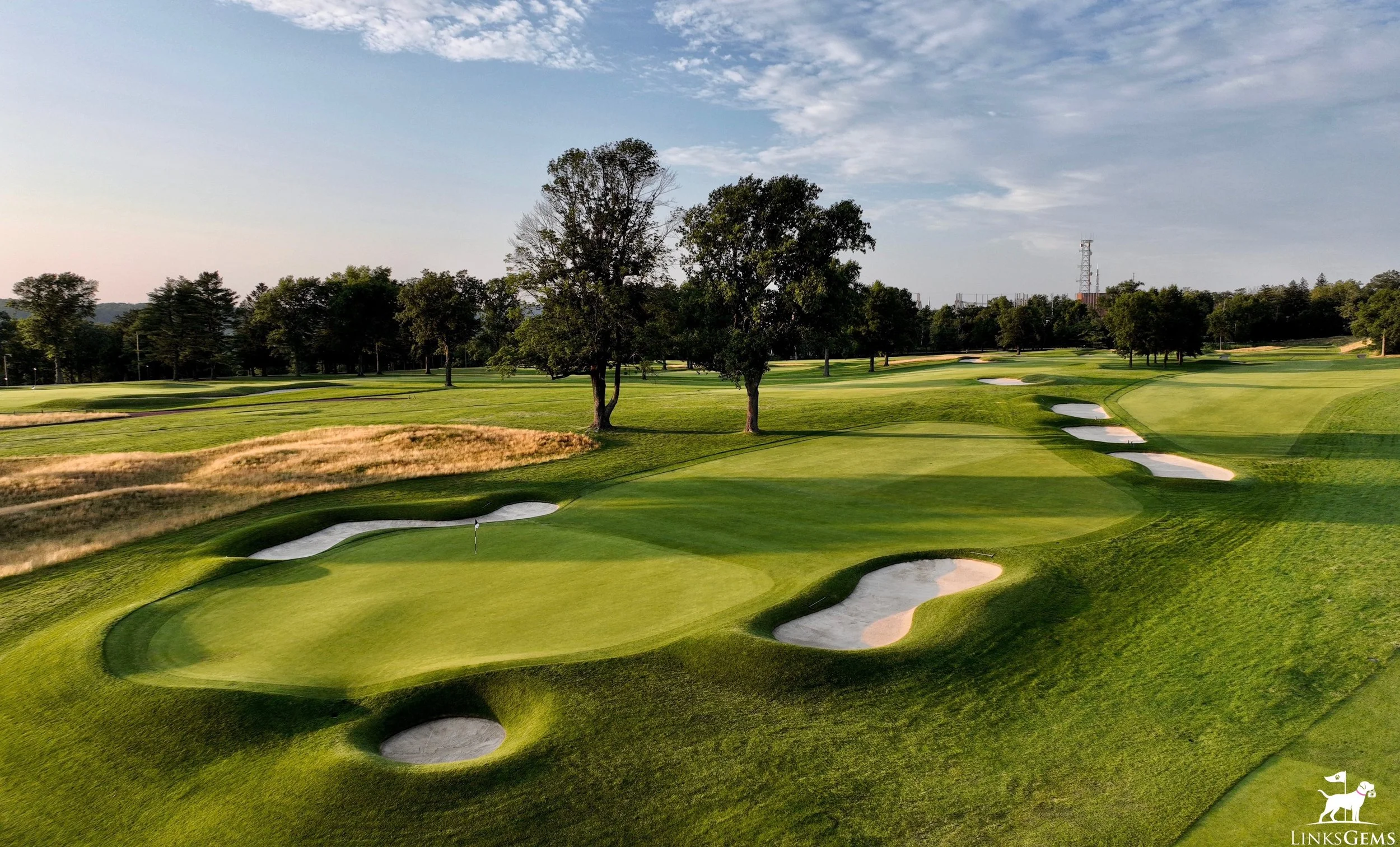
A significant factor in how that was achieved was the redesign of the first hole, which, according to Hanse, was the only hole on the course inconsistent with the style of the club’s original architects. Previously a bunkerless fairway with a modest green, Hole 1 now features cross bunkers roughly 240 yards from the tee, leading to a downhill approach to a large “dustpan” green that runs from front to back.
“Prior to the restoration, Hole 1 was a fairly monotonous hole. By adding the cross bunkers and re-routing the hole into a slight dogleg left, it now requires players to think much more,” said McCabe. “Players must decide between driver and 3-wood, and aim up the right center for the ideal approach.”
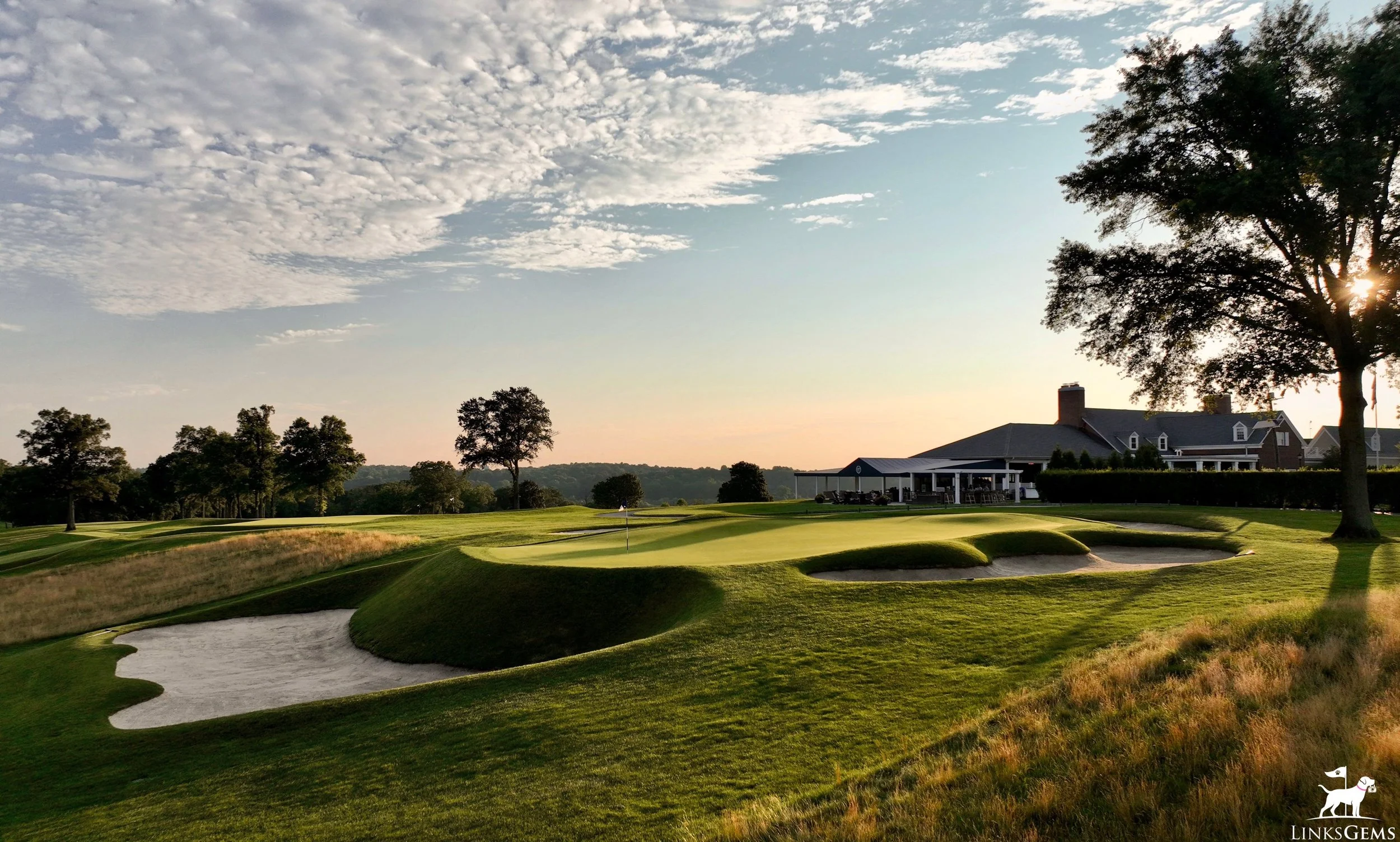
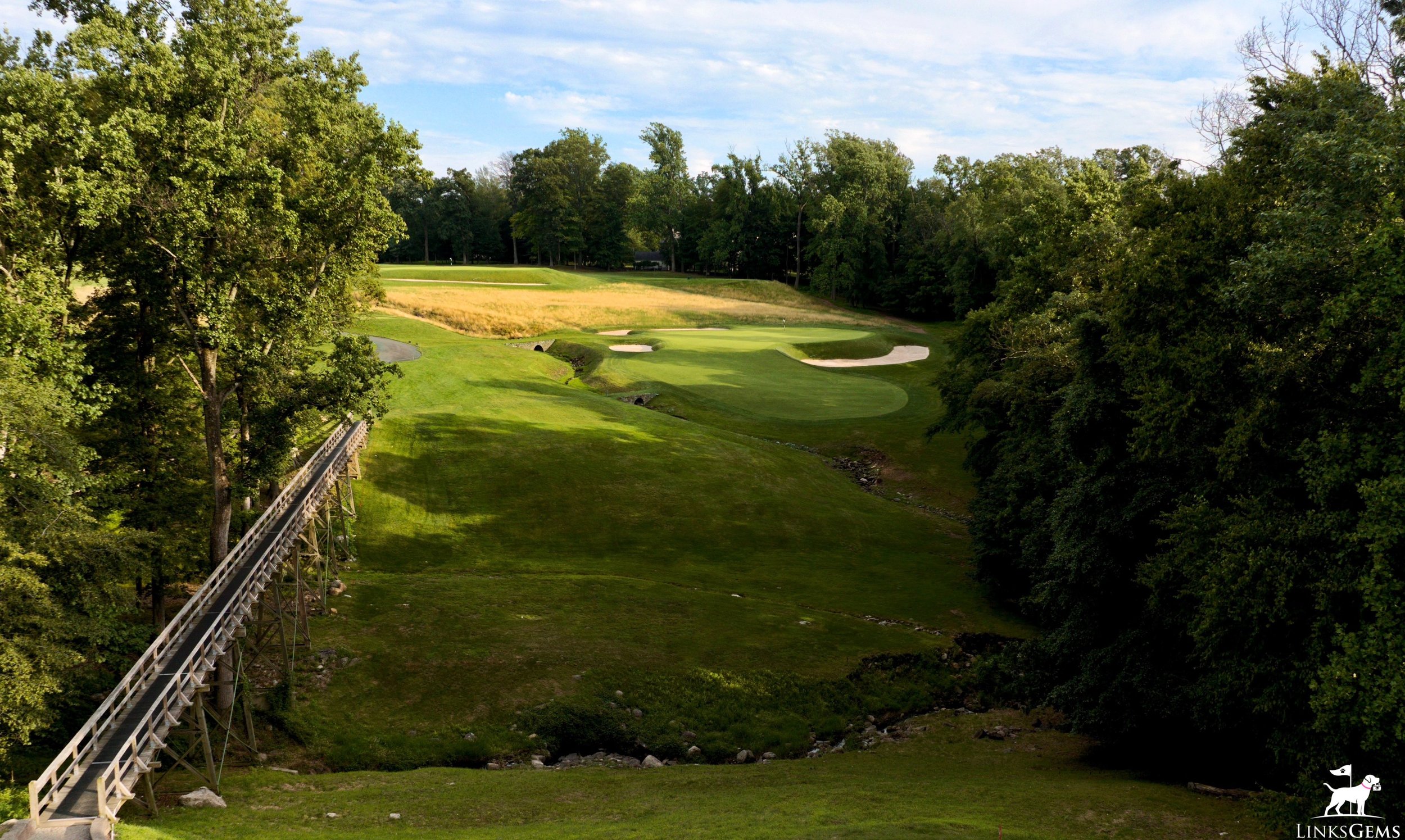
As the back nine is the work of Raynor, Eden, Alps, and Reverse Redan are all featured. Perhaps the most significant changes, though, occurred on the Par-5 13th “Barnes” and the Par-4 16th “Double Plateau.”
On Hole 13, cross bunkers were added roughly 160 yards from the green on the far left to 115 yards on the far right, employing the same strategic concept as Tillinghast’s “Great Hazard” template.
“Because Hole 13 now demands a 180–200 yard second to clear the cross bunkers, there's a greater emphasis on the tee shot," said McCabe. "If you don't find the fairway, carrying the cross bunkers is far less likely, leaving a long third.”
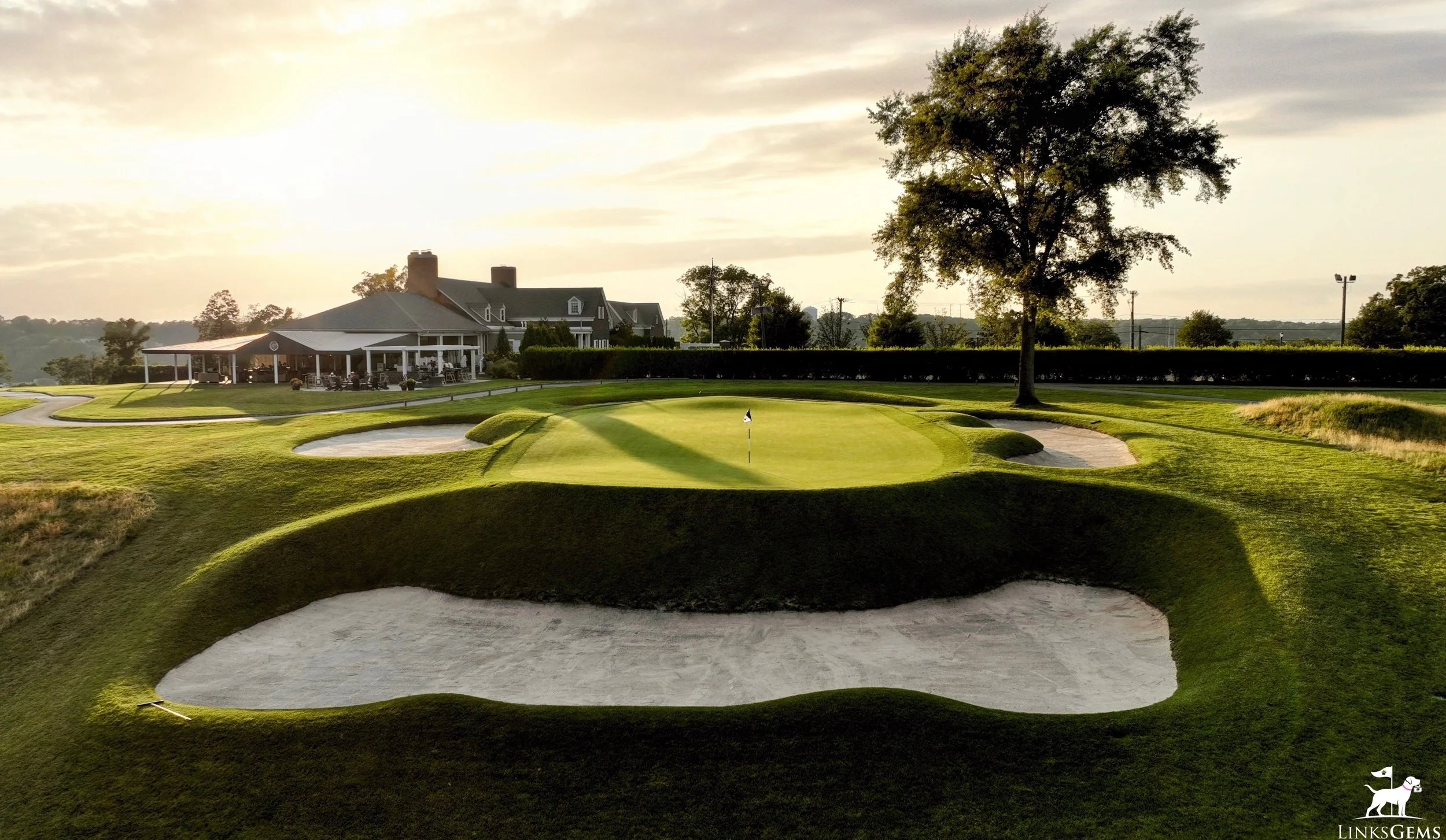
On Hole 16, although the “Principle's Nose” bunker and “Double Plateau” green garner the most attention, five bunkers were reinstated on the right side of the fairway.
“Because the hole plays as a slight dogleg right, players who take on the risk off the tee—challenging the five reinstated bunkers—are rewarded with the ‘speed slot,’ leaving a shorter approach with a better angle to the green,” said McCabe. “However, if they find one of those bunkers or miss left, par becomes an excellent score given the green’s difficulty. The putting surface is divided into three very distinct tiers, making it extremely challenging to leave your ball on the correct tier with a longer approach.”
