
Lost Rail Golf Club
Alex Elias
Courtesy of Patrick Koenig (@pjkoenig)
Designed by Scott Hoffman, a Nebraska native who spent 13 years as a senior design associate for renowned architect Tom Fazio, contributing to nearly 40 high-profile projects, including Gozzer Ranch Golf and Lake Club, Martis Camp, and Pronghorn Golf Club, before collaborating with Jackson Kahn Design on Monterey Peninsula Country Club (Dunes) and Scottsdale National Golf Club, Hoffman drew on his previous experience in designing Lost Rail Golf Club.
“From the very beginning, the site had some characteristics of Gozzer Ranch in that there were so many different environments,” said Hoffman.
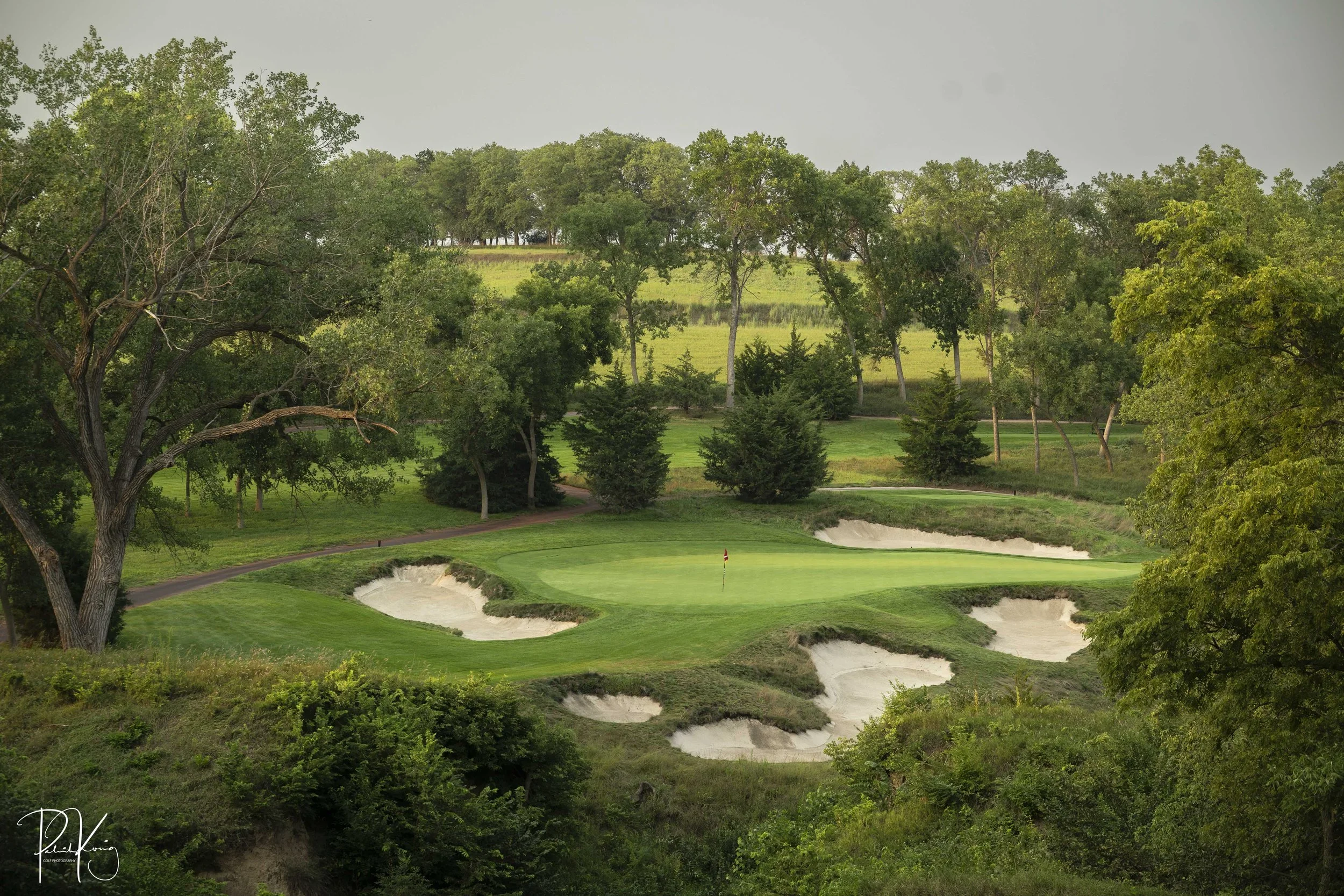
Although the changing environments made an immediate impression, routing the golf course across 155 acres proved to be the biggest challenge.
“This was the toughest routing I’ve ever had to do, mostly because I was trying to stick to my principles as much as possible: tight tee-to-green connections, walkable, wide playing corridors, and continuous environmental change,” said Hoffman. “But I think all goals were hit. Similar to Gozzer Ranch, I was able to route the golf course so that the environments would continually change, which I think is so important.”
Routed through rolling pasture, open farmland, and over deep ravines, fairways extend 70 yards wide.
“That width allowed us to create strategic angles, while allowing higher handicaps to have second shots more often from the fairway than rough or bunkers,” said Hoffman.

Courtesy of Patrick Koenig (@pjkoenig)
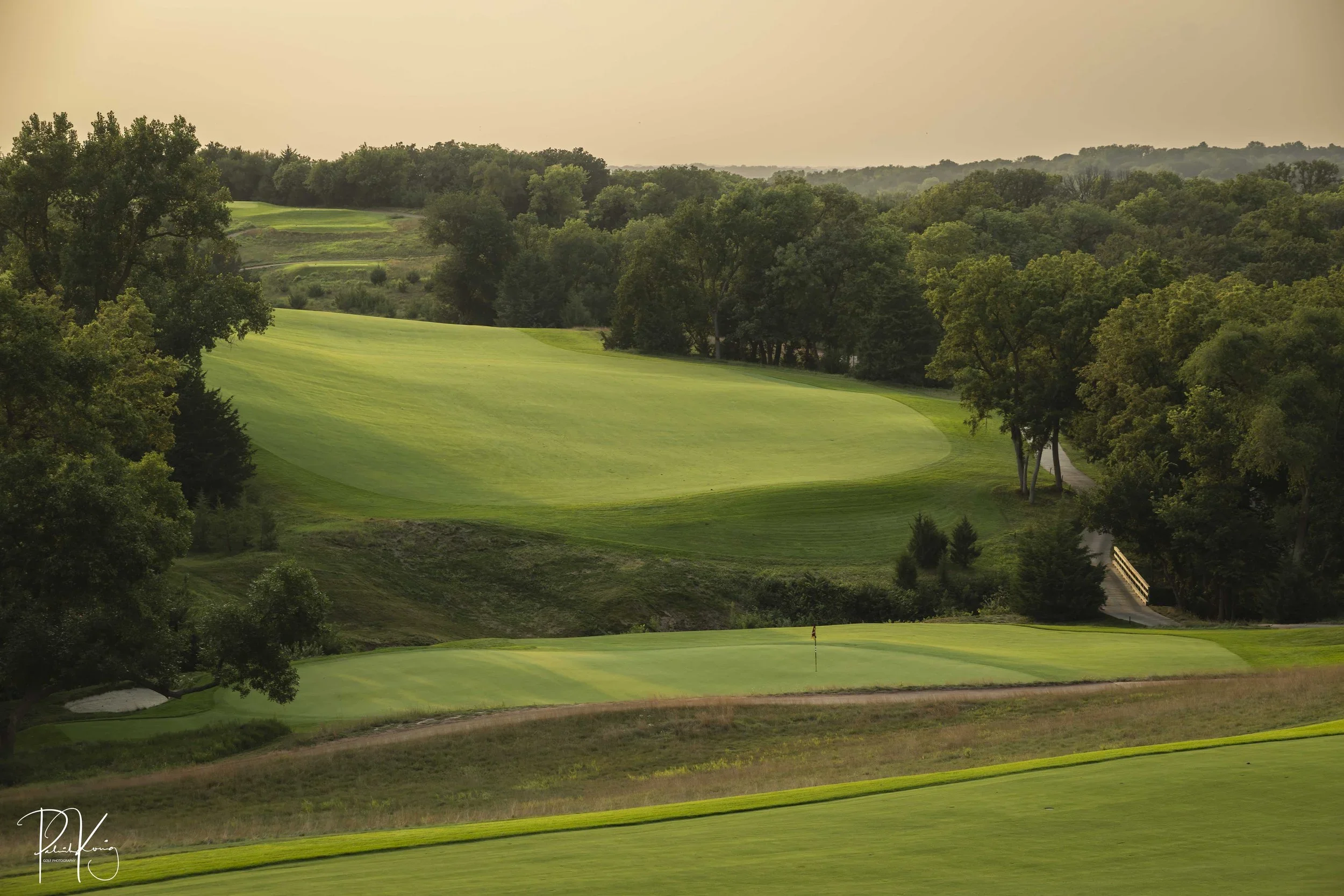
Hole 2 - Par-4 - 425
“A tee shot hit down the right side with fade spin will hit into the hill that somewhat deadens the bounce, leaving a much longer approach than a draw hitting in that exact same spot. The difference could be 50 yards. But if you take that same fade and hit it down the left flatter side of the fairway, it will bounce forward while a draw landing in that same spot will end up in the rough. Line and shot shape are a huge part of the strategy, instead of a more traditional strategy of avoiding fairway bunkers. The fairway width and slope allow us to test highly skilled players while giving less-skilled players a chance to play out of shortgrass.”
Courtesy of Patrick Koenig (@pjkoenig)
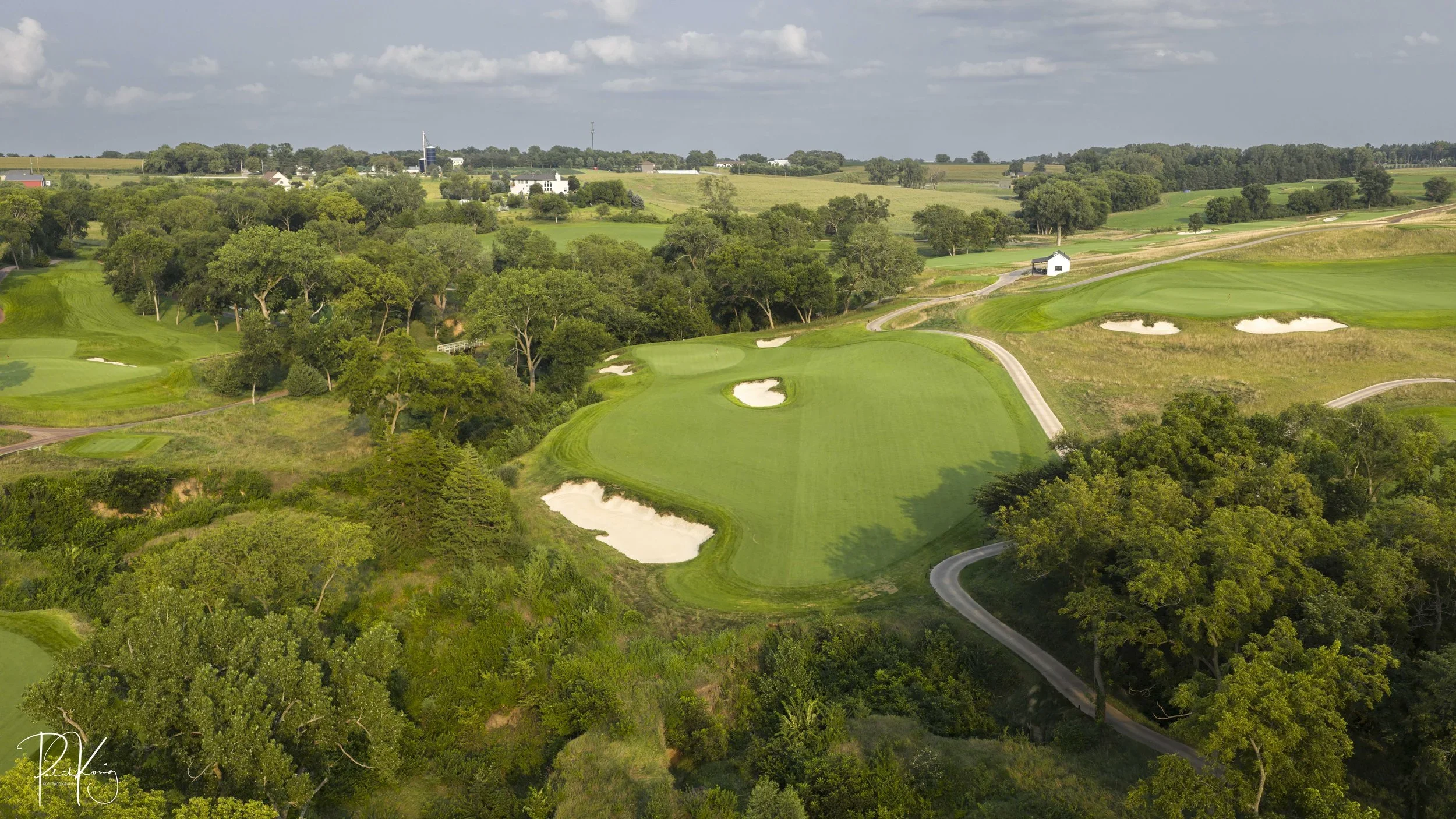
Hole 10 - Par-4 - 303
“The 10th is another example of a hole that has tons of ground strategy as opposed to a tight fairway with multiple bunkers. The fairway is wide, with a large hill on the right side that starts rising about 70 yards out from the green, climbing to create about 15 feet of elevation change before quickly falling diagonally from short left to long right about 15 yards short of the green. A small bunker is placed about 25 yards short of the green in the slope, dividing the top of the hill on the right from the flat left side.
This creates three ways to attempt to drive the green. The flat left side lines up with the green, so you can hit a lower-running shot that fits between the ravine on the left and the bunker. You can fly the bunker, but kicks can become random and, in some cases, the bounce can take you over the green. Or you can hit it to the top of the hill on the right and allow the strong right-to-left downward slope to let your ball tumble down to the surface.
Many times, the best option is the hill on the right, but all three options have their pitfalls. The left has the ravine on one side and bunker on the other. The middle has the bunker and requires some luck if you fly it. The right has the issue of not getting it over the hill or bailing right, which leaves a downhill approach to a green that runs away from you. The 10th is a very popular hole because of these options. I have seen eagles by 15 handicaps and double bogeys by scratch players.”
Courtesy of Patrick Koenig (@pjkoenig)
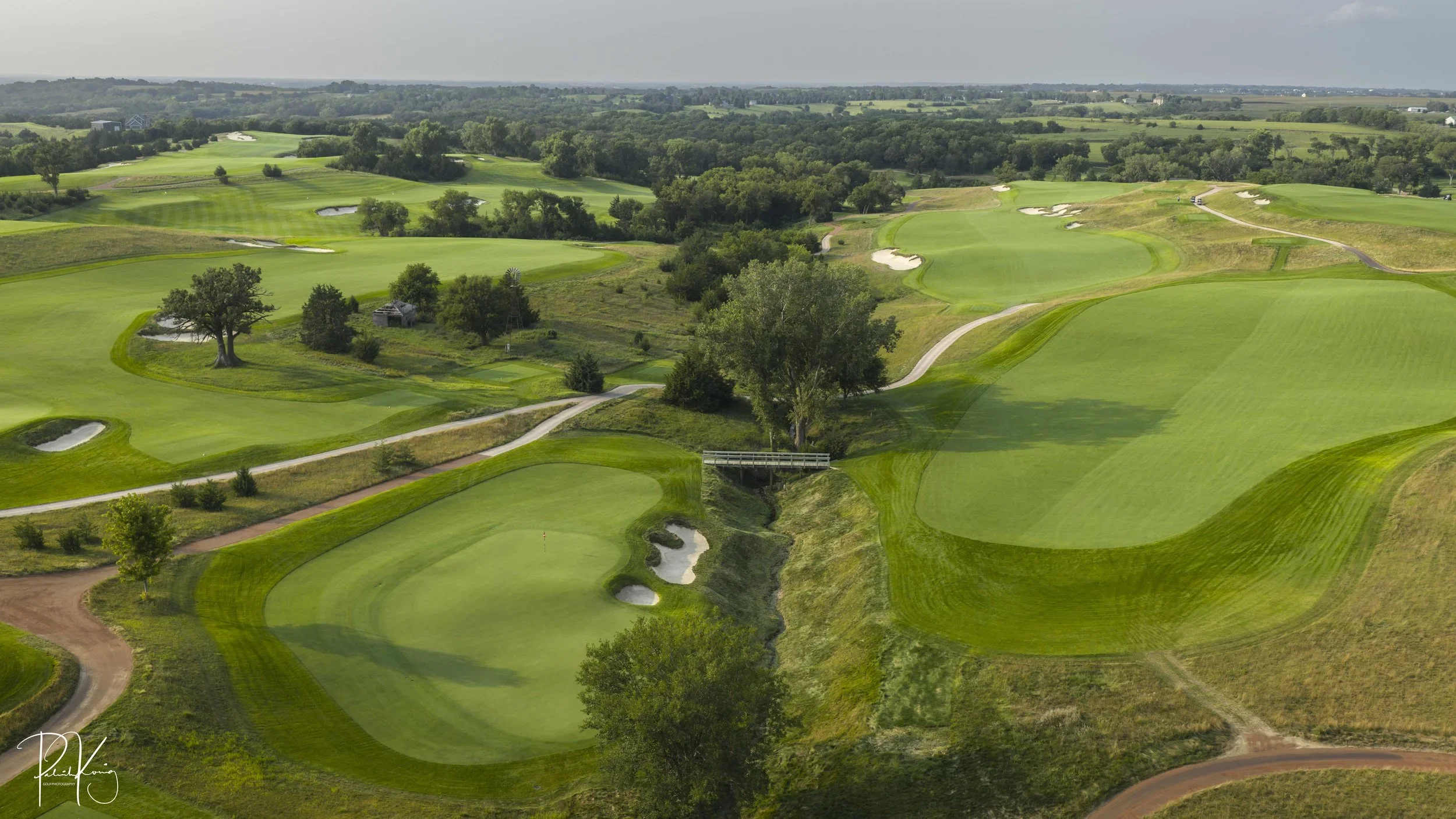
The green complexes vary greatly in size and slope.
“The greens are definitely not flat,” said Hoffman. “The short holes generally have more movement, demanding more precise shots to have birdie opportunities. The longer holes tend to have more exterior slopes you can use to work the ball into the green.”
Lost Rail Golf Club: In February 1914, construction began on a 12-mile shortcut from Yutan to Chalco, reducing the distance from Yutan to Omaha from 49 miles to 22 miles, before the government ordered the immediate removal of rails and material.
“The railroad bed is not just visually prominent; it’s incorporated into the design. Holes five and eight are Par-3s that utilize the railbed in different ways. The fifth almost plays through a slot in the old railroad bed that collapsed many years ago. At the bottom of the ravine, you’ll see a large broken culvert with an engraved date—1914. On the eighth, the back third of the green actually sits on the old bed, where the railroad went from a fill just left of the green to a cut just right of the green. It’s a green setting unlike any that I know of,” said Hoffman.
Track Iron 7: Designed by Hoffman, the 7-hole short course named the “Track Iron 7,” tucked into the southwestern edge of the property, features three double greens, “more severe than the 18-hole golf course.”
“The name ‘Track Iron 7’ comes from the golf club developed in the late 1800s used to hit balls out of cart-wheel ruts in Scotland. Young Tom Morris actually was the first to use the Track Iron (also called a Rut Iron) as we currently use wedges,” said Hoffman. “We thought it was a neat way to honor that history with our ‘wedge’ course. It also has a double meaning with the words ‘track’ and ‘iron’ and their train meanings.”
Pin Flags: A double flag like Friar’s Head and Los Angeles Country Club, the flags pay homage to semaphores from the late 1800s in Europe.
“Wood planks told train engineers the status of the line ahead. If the planks were pointed downward, the line was clear; if one was up and one was down, it meant caution; if both were up, it meant danger,” said Hoffman. “Once again, I love the double meaning, as I associate it with the wind: Both down, attack the pin. Both up, windy—caution, danger.”
