
Q&A: Jason Straka on Miakka Golf Club
Alex Elias
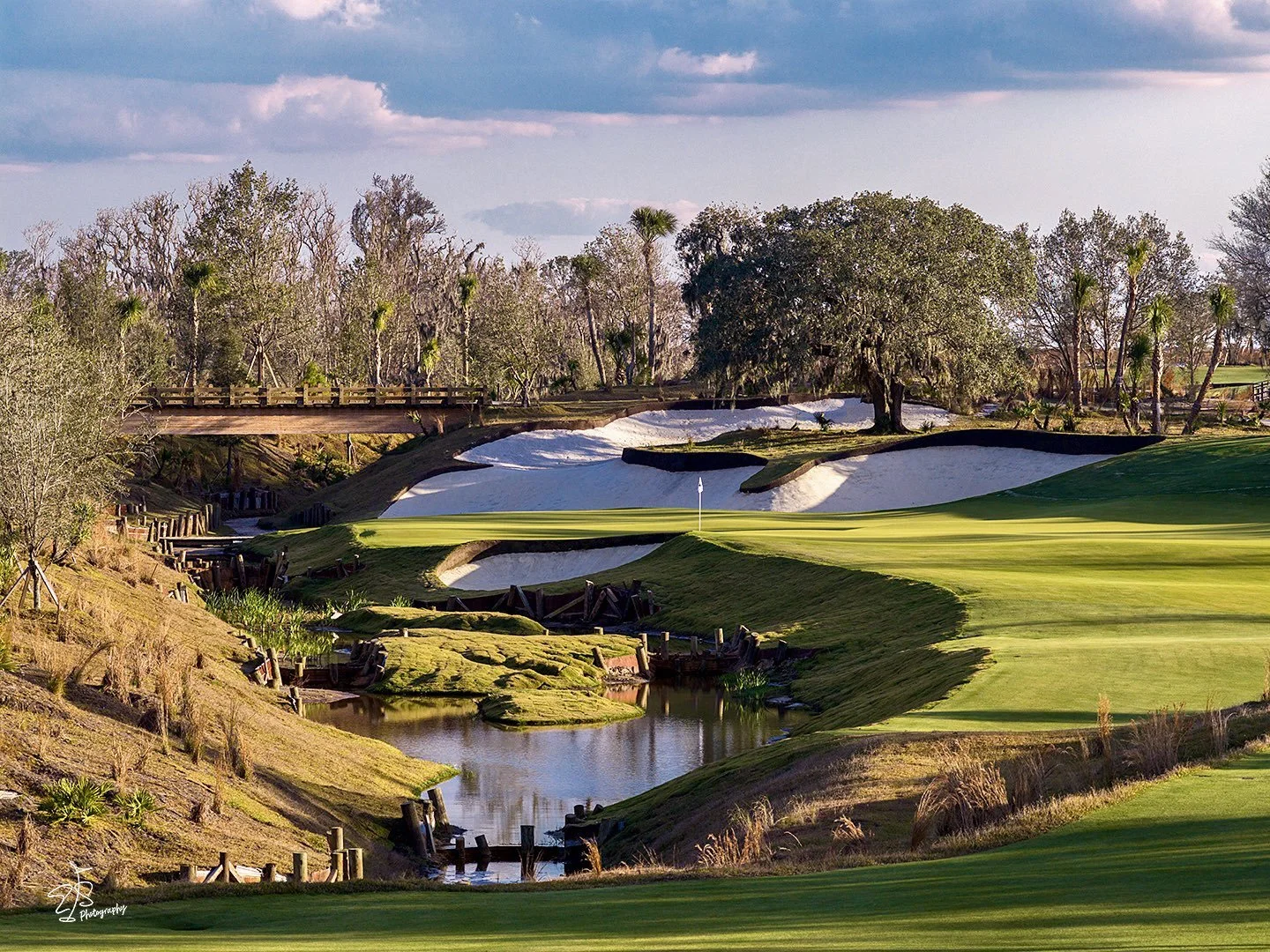
Courtesy of Evan Schiller (@evan_schiller_photography)
Having recently played the front nine and toured the back at Miakka Golf Club, designed by Dana Fry and Jason Straka, I sat down with Straka for a Q&A.
Can you describe just how unique this project is?
It’s hard to do succinctly. There were very few restrictions, particularly when it came to creativity and budget. The permitting process wasn’t easy, but we found some truly unique solutions to protect the Myakka River watershed. This is a one-of-a-kind project. The owner, Steve Herrig, told us outright that he wanted this to be our legacy project. I don’t know what the future holds, but up to this point—and for the foreseeable future—there’s no doubt that it is.
I kept finding myself using the word “different” and the phrase “It doesn't feel like Florida” while walking the course. Can you help put into words just how different Miakka truly is?
We’ve designed other well-known courses in Florida, which have certainly set the bar for creating significant elevation change out of a flat site. Miakka, however, takes that to a whole new level. We moved roughly five times the amount of dirt at Miakka as in the largest of our previous big earthmoving projects, and there’s more elevation change in a single tee shot—Hole 13—than from top to bottom at all of our other Floridian courses. That’s not to diminish what was accomplished before, but Miakka has more than double the amount of space.
As the scale will leave people speechless, Miakka is “different” for several other reasons as well. Can you share some of the differences?
Other major differences include, but are not limited to: a Profile® blended sand cap with Turfdrain of America’s subdrainage on 12- to 14-foot centers; 100% wall-to-wall zoysia, including the greens; Australian Sandbelt–style bunkers with Loksand blended edges resting on Capillary Concrete® bases; multiple-angled ribbon tees; no golf holes on ponds or lakes; exposed aggregate 14-foot-wide concrete paths; a 360º range; a 7-acre short game area; a 4-bay performance center with a golf-centric gym on top; a 12-hole Par-3 course; a tunnel under the clubhouse à la Bel-Air Country Club in California; thousands of transplanted trees; millions of transplanted shrubs and native grasses; and acres of enhanced wetland planting. And that’s just the short list!
I almost wish I had missed the green on Hole 2—or at least dropped a second ball to the left—because I loved the tight grass in that area. One player in our group putted, another bumped a gap wedge into the slope. Can you talk about the variety of shots available around the greens?
Being styled after [The] Royal Melbourne [Golf Club], Kingston Heath [Golf Club], and the like, we wanted very firm conditions, including around the greens. Players can easily putt from 40 or even 50-yards off the green, and there are plenty of interesting contours to read. We absolutely wanted the ground game to be prevalent—which is not easy to do in Florida.
I have to believe the Par-3s will be among the highlights—if not the highlight. Can you briefly touch on them as a set?
They might be the best collection of Par-3s on a course we’ve done. We’re still finishing the last of them, the 12th, so it’s hard to say definitively. But they are extraordinarily varied—in length, direction, elevation, views, hazards, angles, and more.
One of the most apparent features is not only the ribbon tees, but the sheer number of teeing grounds, which create different angles—and therefore different strategies. On Hole 3, for example, one tee plays as a Cape hole, forcing players to choose how aggressive a line to take, while another plays much more straight on. How do these varied tee boxes enhance strategy and enjoyment? And how much of this emphasis reflects the club’s vision for its future membership, particularly its many national members, who can visit for a weekend and feel as if they played a “different” golf course each day?
Usually we are restricted by space, but that wasn’t the case at Miakka. Even when a hole looks straight from tee to green, careful study—or play—reveals fairways that swing 40 or even 60- yards in one direction and then back again around hazards. This creates strategy for every shot—including second, third, and even fourth shots. Additionally, the multiple-angled tees on many holes allow vast differences in length and angle from day to day. National members could play all week and never see the same setup twice—not even close. And despite all this variety, the course remains very walkable!
You and Dana both mentioned that the back nine will be more dramatic. Can you expand on that?
The back nine features more elevation change within a slightly smaller footprint. This makes the shifts feel more abrupt—and, as a result, more dramatic.
