
Alex Elias
Courtesy of Jeff Marsh (@jeffkmarsh)
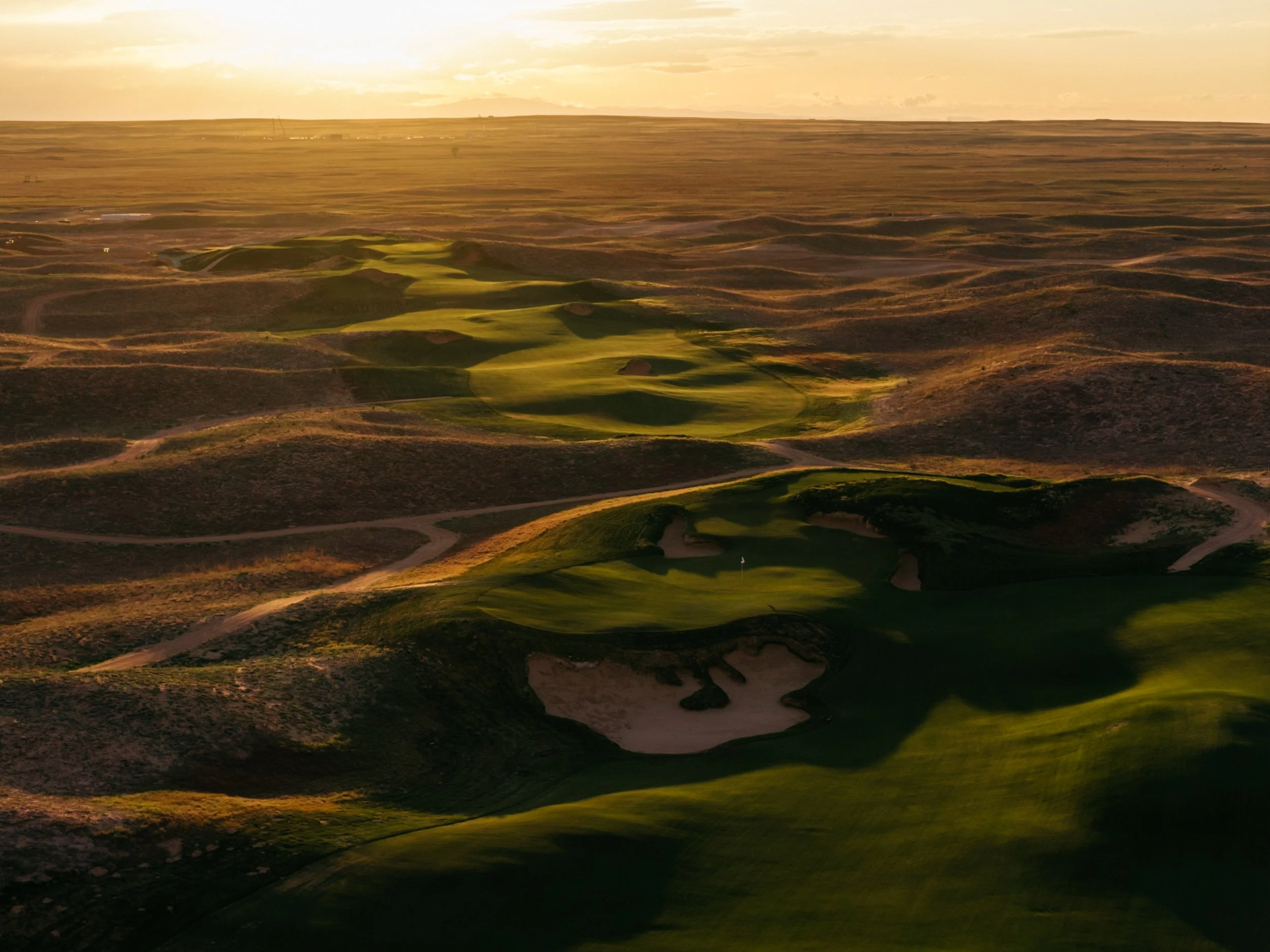
Rodeo Dunes represents a return to Bill Coore and Ben Crenshaw’s design roots.
“It’s hard to look at this site and not think of Sand Hills,” said Crenshaw.
Known for their minimalist approach, Coore himself admitted, he and Crenshaw discussed doing some major earthwork to level some of the valleys that lay beyond the ridges, but ultimately decided against it, as they would not have changed this land in Ireland or Scotland.
As a result, the course blends seamlessly into the terrain while featuring a certain quirkiness.
“It is uniquely quirky, as it’s what the land dictated,” said Coore.
In particular, the Par-4 4th perfectly exemplifies that principle.
“The high-low split fairway, combined with a hidden bunker that catches aggressive tee shots from longer hitters, forces players to think carefully. Challenge the upper fairway and you risk finding the bunker hidden from view. Play safely to the lower fairway on the right, and certain pin positions become much more difficult to access,” said Clark Willard, Head Golf Professional at Rodeo Dunes. “And with a six-foot-tall knob covered in thick fescue, as opposed to a pot bunker, in front of the ‘Lion’s Mouth’-inspired green, the approach may be even more distinct.”
A theme that continues throughout the course, that quirkiness is the beauty of the design.
“Play the course once and you’ll understand exactly what Mr. Coore means when he calls it ‘uniquely quirky.’ Play it a few more times, and you’ll begin to appreciate the masterpiece he and Ben Crenshaw created by embracing the quirky landforms. Whether it be Hole 4, the drivable 6th, the back-to-back Par-3s on the back, or the number of blind shots, each hole works with the land rather than against it.”
Courtesy of Jeff Marsh (@jeffkmarsh)
On the short Par-4 17th, which sits well within the dunes, marked by a knob that defines the center of the fairway, players are presented with several strategic options.
“I don't think there's one ideal line off the tee. It's all about balancing your skill level with your appetite for risk, especially given it's the penultimate hole, when the stakes often feel highest,” said Willard. “If you're trailing in a match, you might try to carry the cavernous bunker on the left and leave yourself on or near the green. Or you could thread a low, running tee shot between that bunker and the large knob, or play safely to the right of the knob, utilizing the contours.”
