
The California Golf Club of San Francisco: Hole 7
Alex Elias
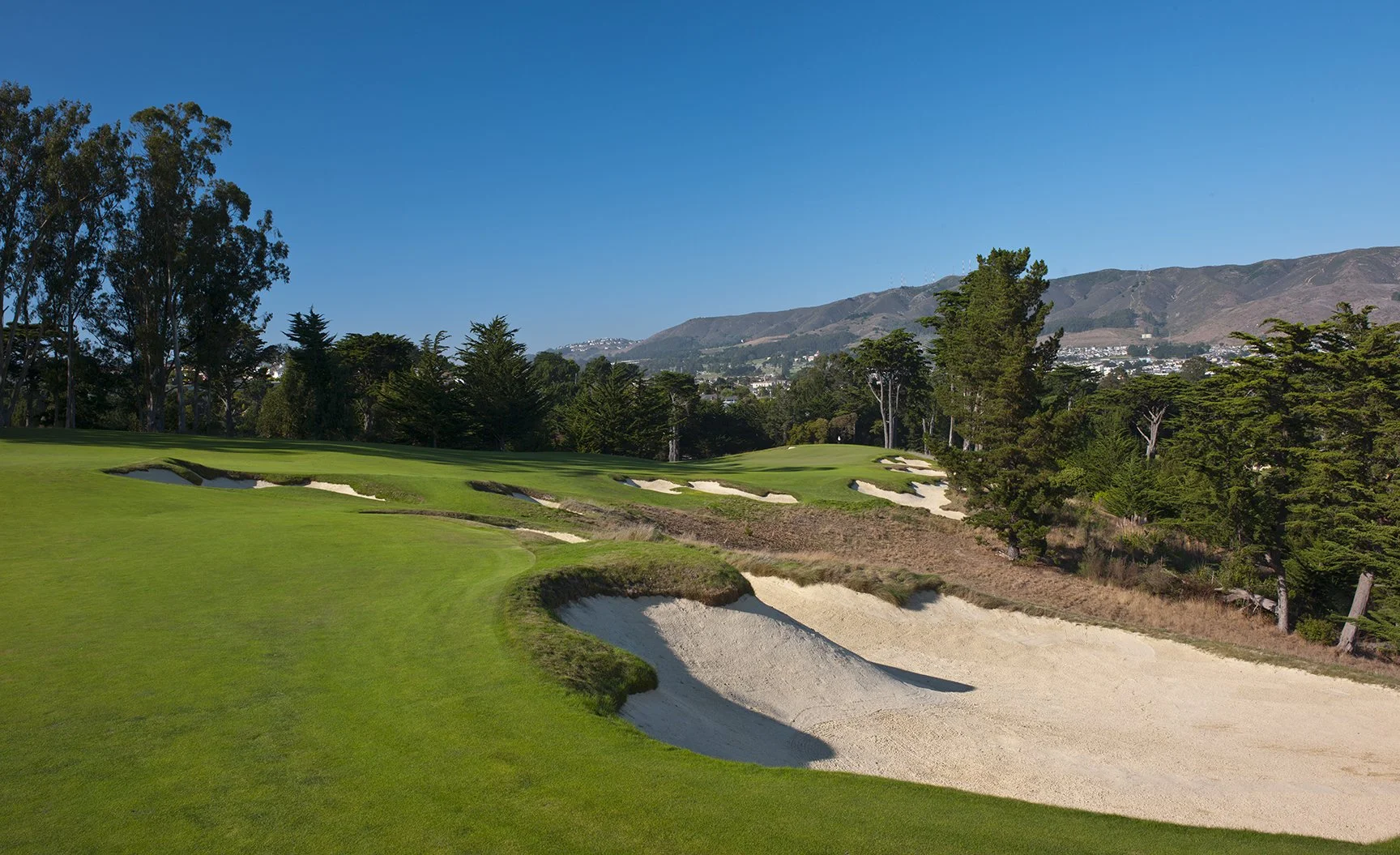
Courtesy of Laurence Casey Lambrecht (@lclambrecht)
Designed by A. Vernon Macan in 1926, Alister MacKenzie would later redesign the bunkering and at least two of the greens—Holes 3 and 10—just prior to his work at Cypress Point Club.
In 2008, Kyle Phillips restored the course to its Golden Age design, referencing a 1938 aerial photograph. In addition, Phillips relocated the driving range and cleared hundreds of trees across the property that had long obstructed views of the topography, clubhouse, and downtown South San Francisco and the Bay, creating five new holes—including the Par-4 7th—on a previously unused bluff.
“I’ve yet to hear a negative thought on Hole 7. It takes your breath away,” said Will Manning, First Assistant Golf Professional at The California Golf Club of San Francisco. “Not only is it one of the best holes in California, but it doesn’t disrupt the routing either, as it flows naturally into the long Par-3 8th.”
A Cape Hole, running along a ridge that features falloff on each side of the fairway, players must decide how aggressive a line to take.
“With the fairway tilted left to right, the more aggressive you are, carrying the bunker complex, the more likely the ball is to kick down toward the green,” said Manning.
Though the tee shot is the most memorable aspect of the hole, the approach demands just as much commitment.
“It’s a hole where you need to hit two really good golf shots,” said Manning. “A good tee shot, depending on the line taken, can leave you anywhere from 150 yards downhill to just a few yards from the green. With firm and fast conditions, it opens up a lot of imagination for the second shot—high wedges, low bump-and-runs with less lofted clubs, and the occasional 100-yard putt all come into play, making for an eventful approach.”
