
The Keep at McLemore Resort
Alex Elias
Courtesy of Jeff Marsh (@jeffkmarsh)
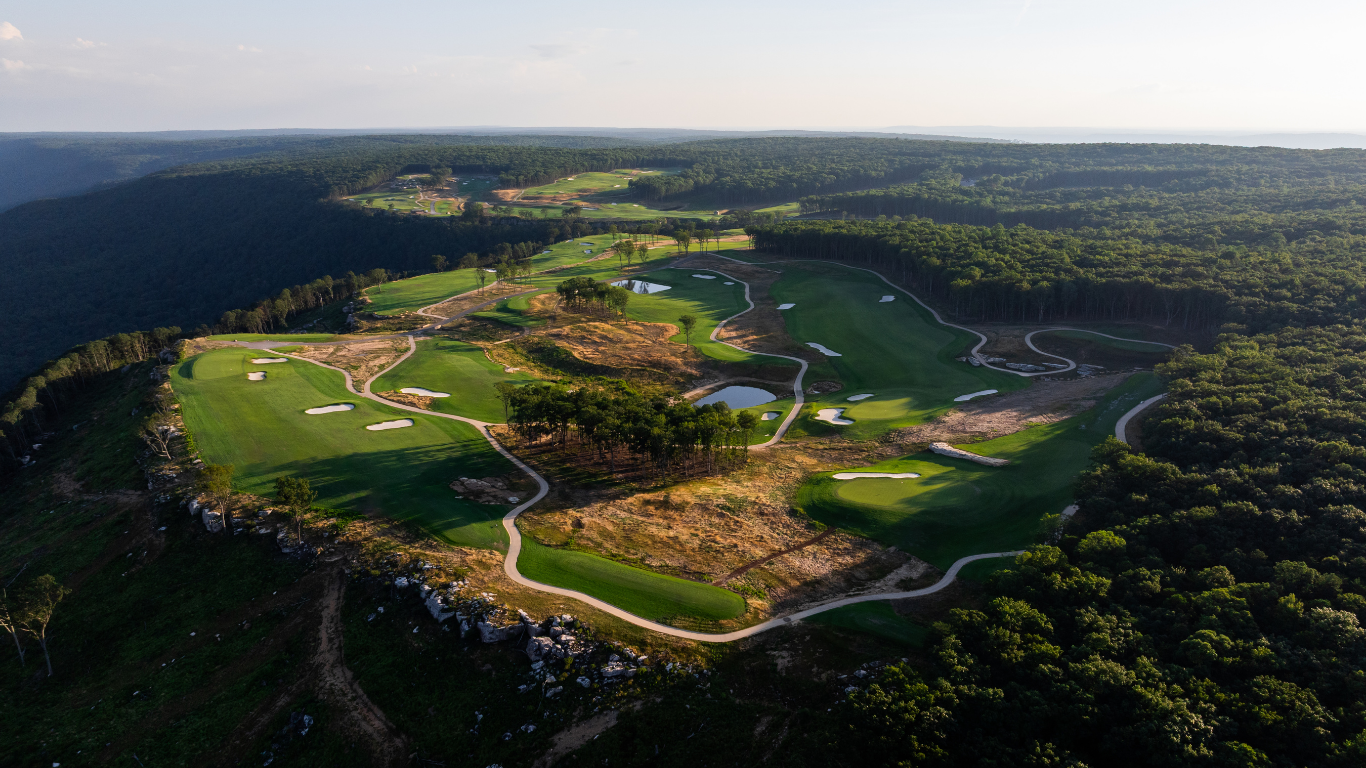
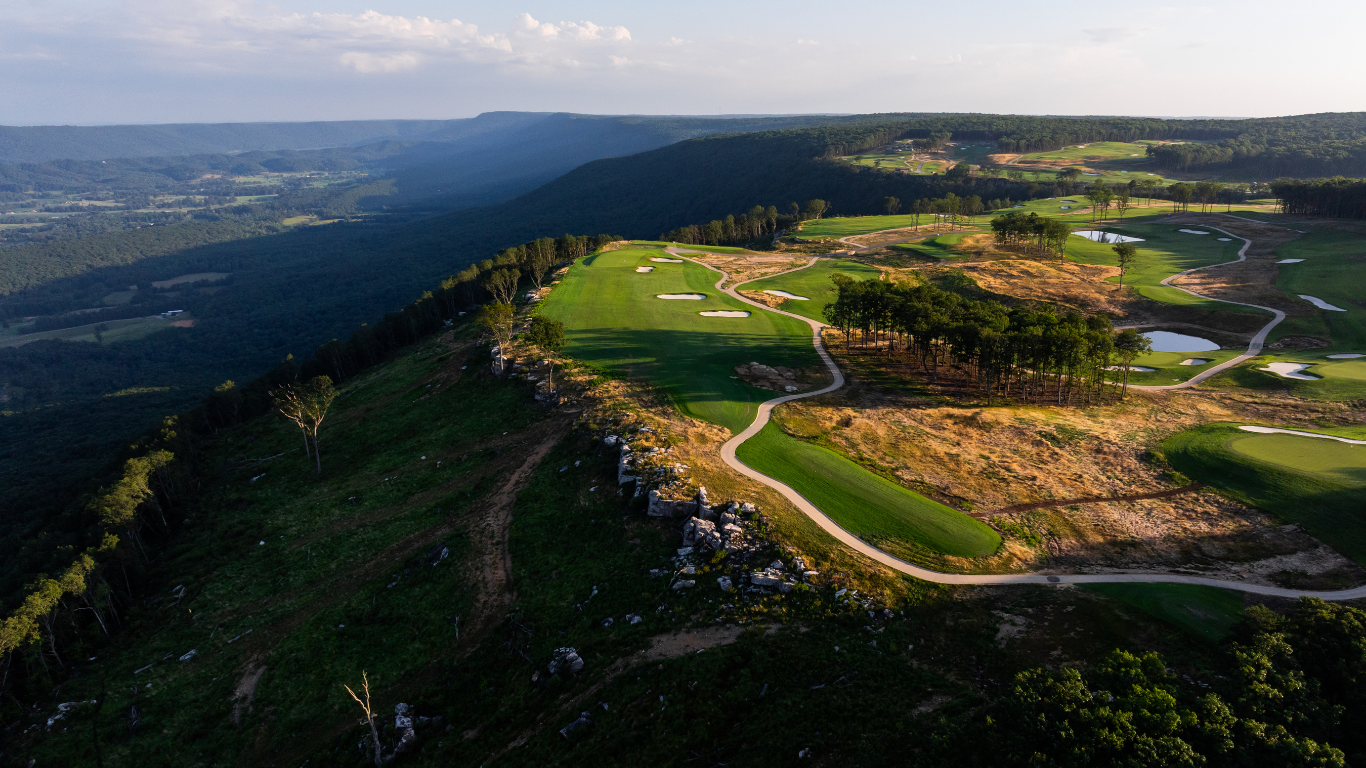
Opening in late 2025, The Keep—McLemore Resort’s second course, designed by Bill Bergin and Rees Jones—features a scenic vantage point along Lookout Mountain in northwest Georgia, rising more than 1,000 feet above the valley below.
“The Keep is situated in an amphitheater along the eastern edge of Lookout Mountain. It’s as if the edge is the stage, and the seating rises into the hillside—there’s not a bad seat in the house,” said Bergin. “The scale of the course is immense, and honestly, difficult to fully appreciate until you play it.”
Guided by a clear philosophy, which Bergin said “revolves around the playability of a golf course—most importantly, do I want to play it again,” he and Rees Jones set out to:
Create a course that is fun for high handicaps and challenging for low handicaps
Limit lost balls and high scores, while also preventing overly easy scoring
Allow for an appropriate pace of play
Fit the land to produce an authentic golf experience
Deliver the best possible conditioning on a daily basis
Maximize the natural drama of the property
The first of those objectives is reflected in the course’s varied lengths, with ribbon tees as much as 100 yards and minimal use of formal “tee boxes”, wide fairways covering over 70 acres, and a strong emphasis on the ground game.
“The course stretches from 4,400 to about 7,800 yards, putting a wide variety of clubs into most any golfer’s hands,” said Bergin. “Ample fairways and tee options give the average player a comfortable start on each hole. Once in play, it’s time to think about the challenges that occur as one moves closer to the green complex. What happens on the ground really impacts the average player, while the demands of length, hole location, and bunker placement come together to challenge the better player.”
To fit the land to produce an authentic golf experience, Bergin and Jones designed a thoughtful routing, which Bergin described as the “beauty of The Keep.” While it touches all of the natural beauty of the property, it does so without compromising the golf.
“We move in all directions and lengths, but the valley is the anchor. Each time we climb a hill, we present the golfer with a scoring opportunity—a short Par-4 or Par-5,” said Bergin. “Rock features with ancient patina are abundant across the property. In no way do these boulders and outcroppings interfere with play, though. In fact, they enhance the course by defining areas of play, framing natural teeing grounds, and even forming a citadel around the sides and back of the 17th green.”
To maximize the natural drama of the property, which Bergin noted begins before even stepping on the first tee, but rather in coming down the parking lot, saying, “It’s a simple wow in all directions,” five holes flow along the cliff edge.
The rest are routed through the open interior, providing views that stretch 10 to 20 miles into the distance, and there are at least five locations across the course where you can see at least a portion of all 18 holes.
Courtesy of Jeff Marsh (@jeffkmarsh)
Featured Hole:
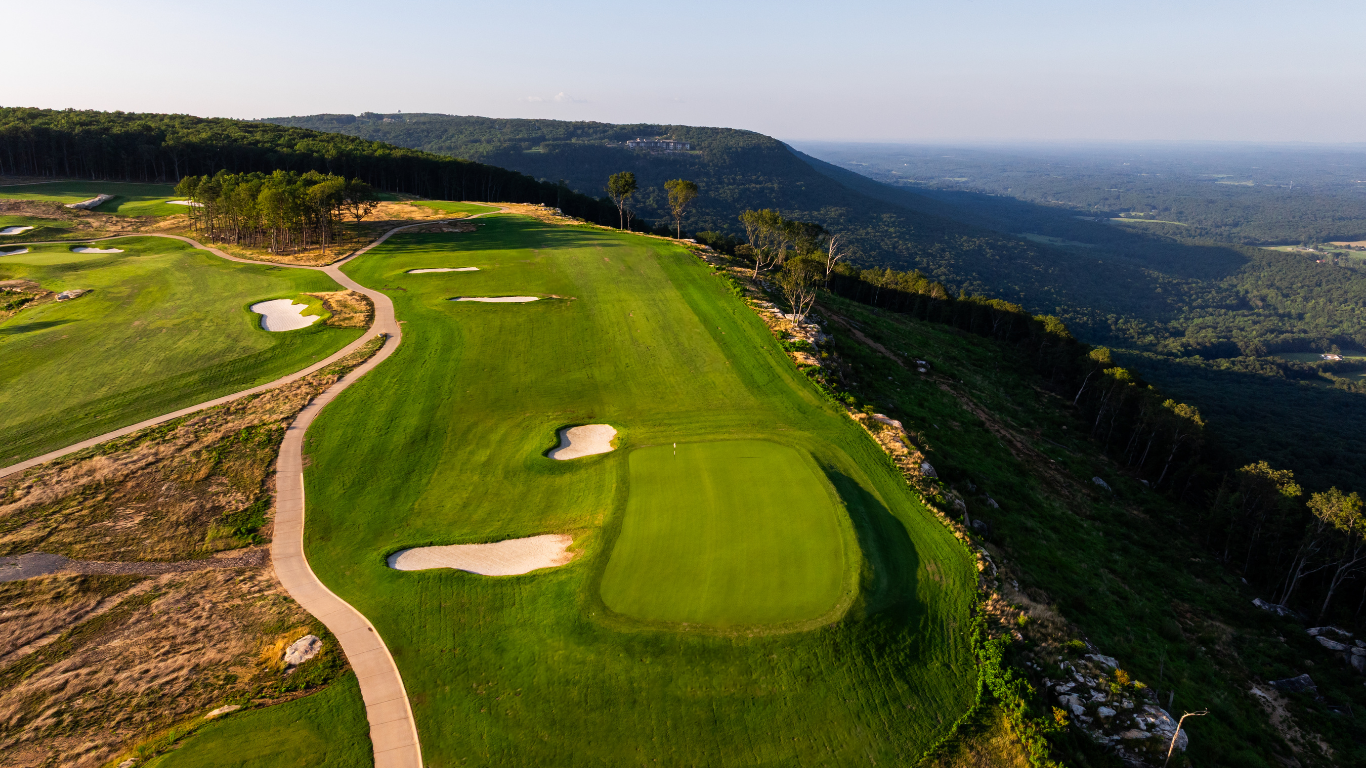
Hole 9 - Par-4 - 427
Though five holes (1, 9, 10, 11, and 18)—spanning 1.5 miles—are routed along the cliff edge, the Par-4 9th is perhaps the most dramatic. With two staggered bunkers on the right, players are forced left off the tee, closer to the infinity edge.
Similarly, the green features two bunkers on the right, with any shot left of the long but somewhat narrow green out of bounds. Though the margin for error on the approach is thin, players can still utilize the ground game to run an approach onto the green.
