
The Restoration of Donald Ross’ Design at Florida’s Oldest Club
Alex Elias

Courtesy of Evan Schiller (@evan_schiller_photography)
Founded in 1897, Belleair Country Club—25 miles west of Tampa—is the oldest club in Florida. Originally a six-hole course, the West Course expanded to eighteen holes in 1909. In 1915, Donald Ross redesigned the West Course and added the East Course. Less than a decade later, in 1924, Ross returned to revise both courses, drawing on another decade of experience designing courses across the U.S.
In 2020, Belleair hired Fry/Straka Global Golf Course Design to oversee the restoration of the West Course. To return the course to Ross’ 1924 design, Fry/Straka turned to historical records stored at the Tufts Archives at Pinehurst Resort (Pinehurst, North Carolina) and The Belleview Inn (Belleair, Florida).
“The vast bulk of the work we did at Belleair was to undo what had been done over the past sixty years,” said Straka. “Through previous rebuilds, where the greens had been built on top of the previous greens rather than removed and rebuilt at the same grade, and decades of top-dressing, the greens had been raised significantly—five, six, seven feet in the air, even more in some cases.”
In particular, the Par-3 4th green, which had strayed drastically from Ross’ vision, had been pushed up several feet, with runoffs in all directions—so much so that when standing on the tee, the Intracoastal Waterway behind the green was hidden from view. Restored to Ross’ design, Hole 4 (pictured above) now plays slightly downhill to an island green, surrounded almost entirely by sand.
“Hole 4 was incredibly restored and is absolutely beautiful,” said Jim Slattery, Director of Golf at Belleair Country Club. “Not only does the green now sit at zero grade, offering a view of the water, but it appears as if the water is directly behind it, when in fact there are two fairways between the green and the water.”
Though Hole 4 may be the most captivating transformation, the Par-4 14th green was perhaps the most dramatic.
“As we reviewed Ross’ notes, he had a four-foot backsplash on the fourteenth green, where if you hit it slightly long, the ball would feed back toward the center. But when we stood there, the green was built up like a volcano, falling away on each side,” said Straka. “When we started lowering the fourteenth green, we went through the layers of the old greens like a birthday cake. On most greens, we knew when we reached the original grade because the surrounding grade tied in better, but on the fourteenth, we hit the old railroad bed Ross had built the green on.”

Courtesy of Evan Schiller (@evan_schiller_photography)
In addition to the greens, Fry/Straka’s restoration of Ross’ cop mounds—what Straka referred to as “inverted bunkers”—and streams—which come into play on eleven of the eighteen holes—had an immense effect on returning the course to how Ross intended it to be played. On the 416-yard Par-4 3rd, which Straka admitted was “painstakingly restored to Ross’ design,” cop mounds were restored on the left, and the stream was restored on the right.
“Hole 3 is a perfect example of how Ross’ strategy has really come back to life,” said Slattery. “Before the restoration, members would tend to hit away from the stream to the left, which offers the ideal angle. But with the return of the cop mounds, players are forced back toward the center, bringing the stream into play. On Hole 3 especially—but really throughout the entire course—players now have to think much more about risk-reward on the tee.”
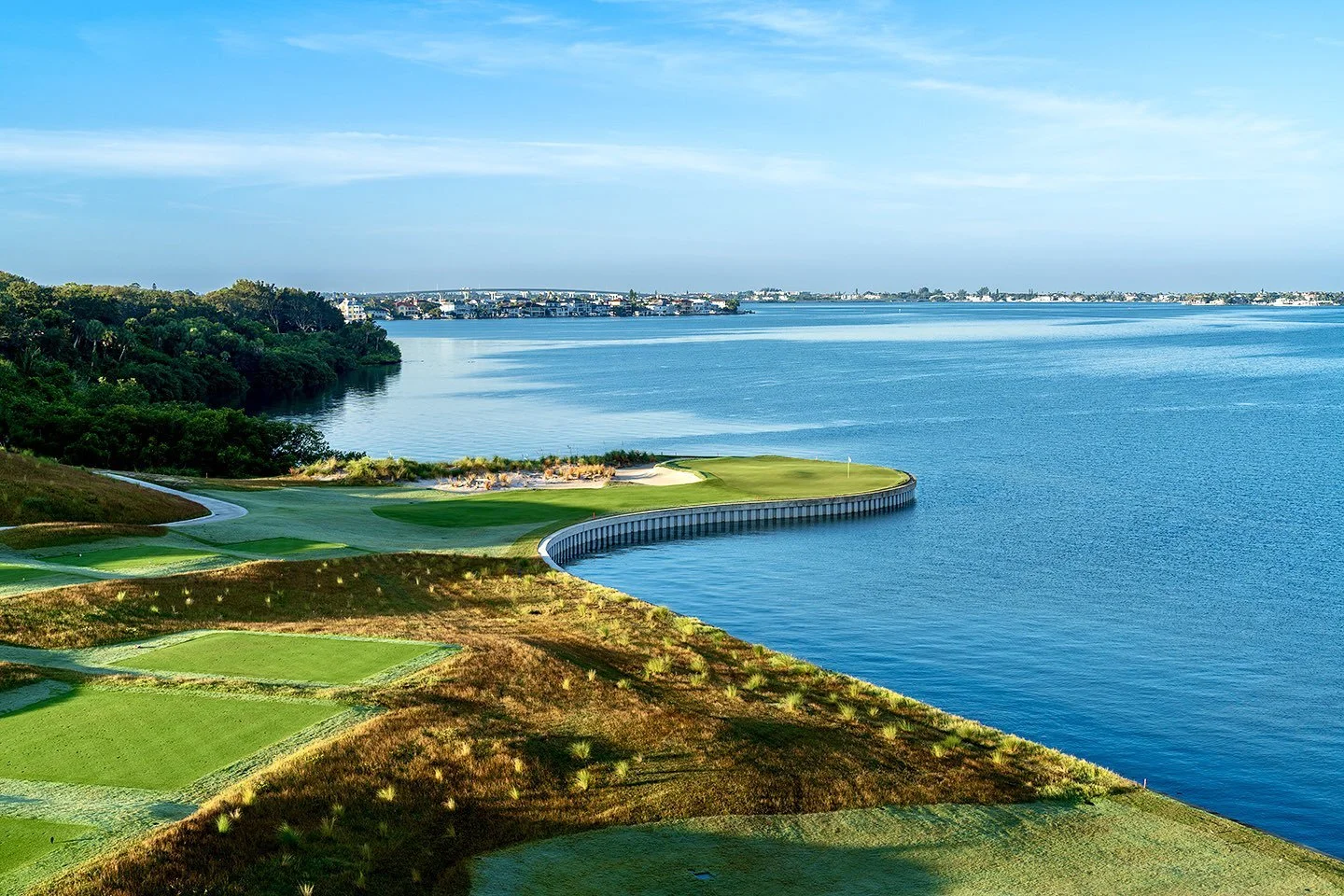
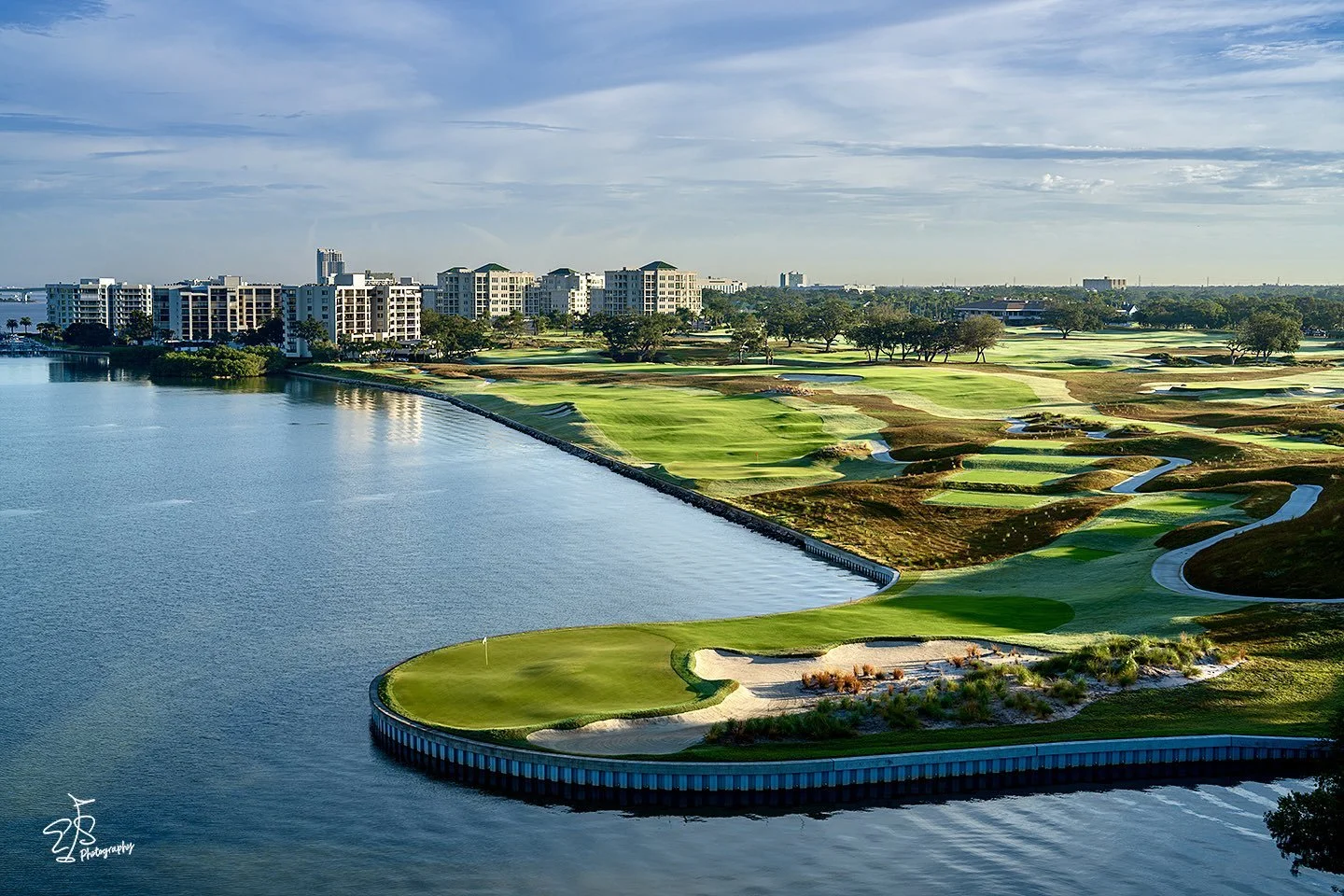
In all, Straka restored seventeen holes and replaced an existing Par-3 with the Par-3 7th. The downhill Par-3 7th plays to a peninsula green that extends into the Intracoastal Waterway. Although there was initially some hesitancy to design a new hole, Straka said, “The consensus was that if Ross had had access to the land, then he would have used it,” since at the time the peninsula was owned by the town of Belleair.
“If you hit it short, long, or right, you're in the water. If you hit it left, you're in a bunker—or possibly cop mounds. It's a demanding hole, but the view trumps even its difficulty,” said Slattery.
