
Trinity Forest Golf Club
Alex Elias
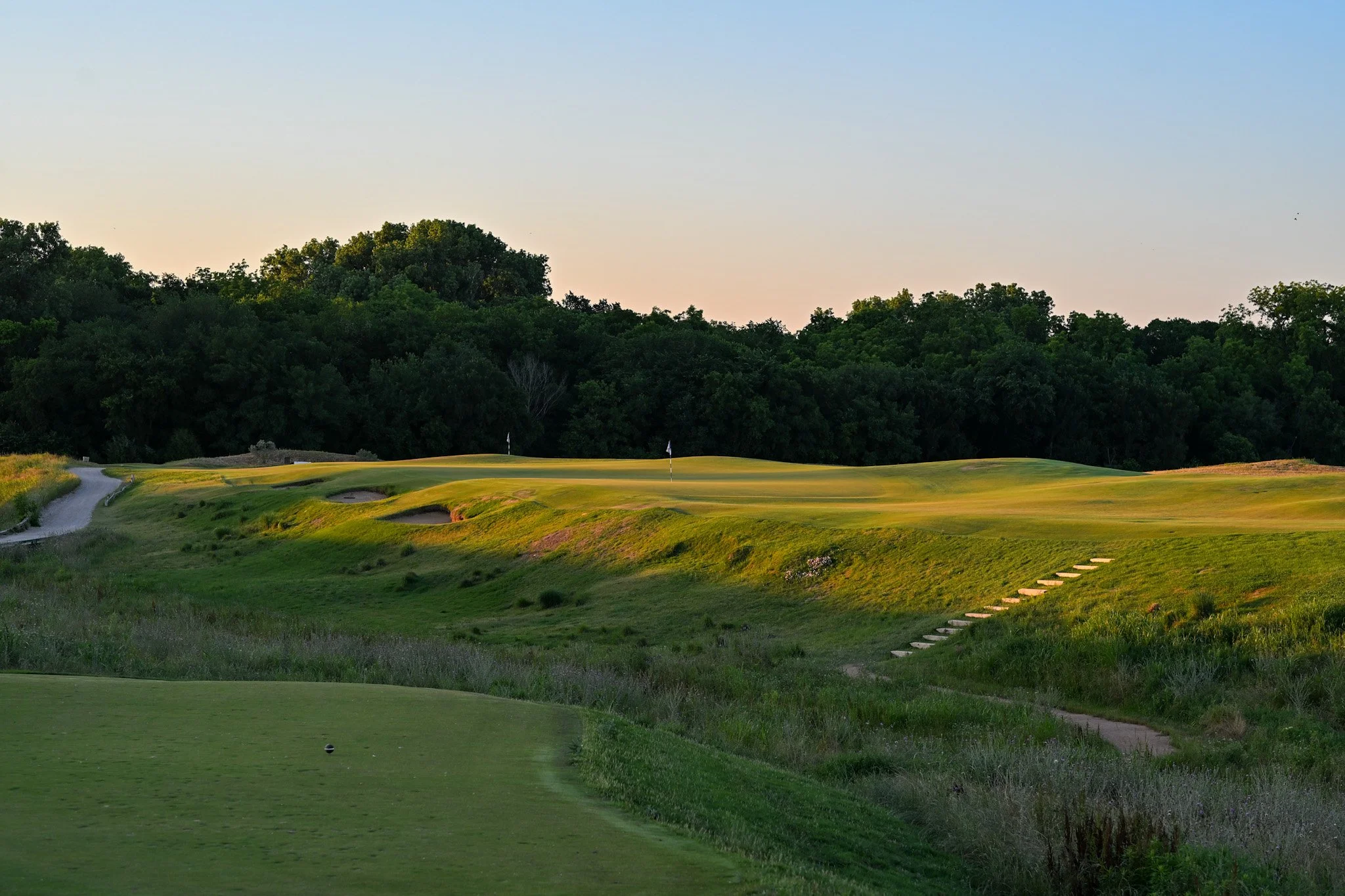
Just a few minutes from downtown Dallas, Trinity Forest Golf Club was designed by Bill Coore & Ben Crenshaw on an illegal landfill, a stark contrast to the landfills on which Bayonne Golf Club and Liberty National Golf Club were built a decade earlier.
“As the layer of clay placed over the debris to ‘cap’ it had been compromised, there was a series of ridges that had settled over time,” said Kasey Kauff, Superintendent at Trinity Forest Golf Club. “That’s why the terrain appealed to Bill and Ben.”
By preserving the rumpled nature of the property by capping the site with two feet of approved clay, with an additional six inches or more in some cases of soil placed on top, Coore and Crenshaw were able to utilize the site’s natural features, as they would at their other designs, staying as true to their minimalist approach as possible.
“If you didn’t know Trinity Forest was a landfill before, you’d think the land is exactly how Bill and Ben found it,” said Kauff. “That’s because the fairways follow exactly how they found the landfill, just with the clay cap on top.”
Courtesy of Evan Schiller (@evan_schiller_photography)
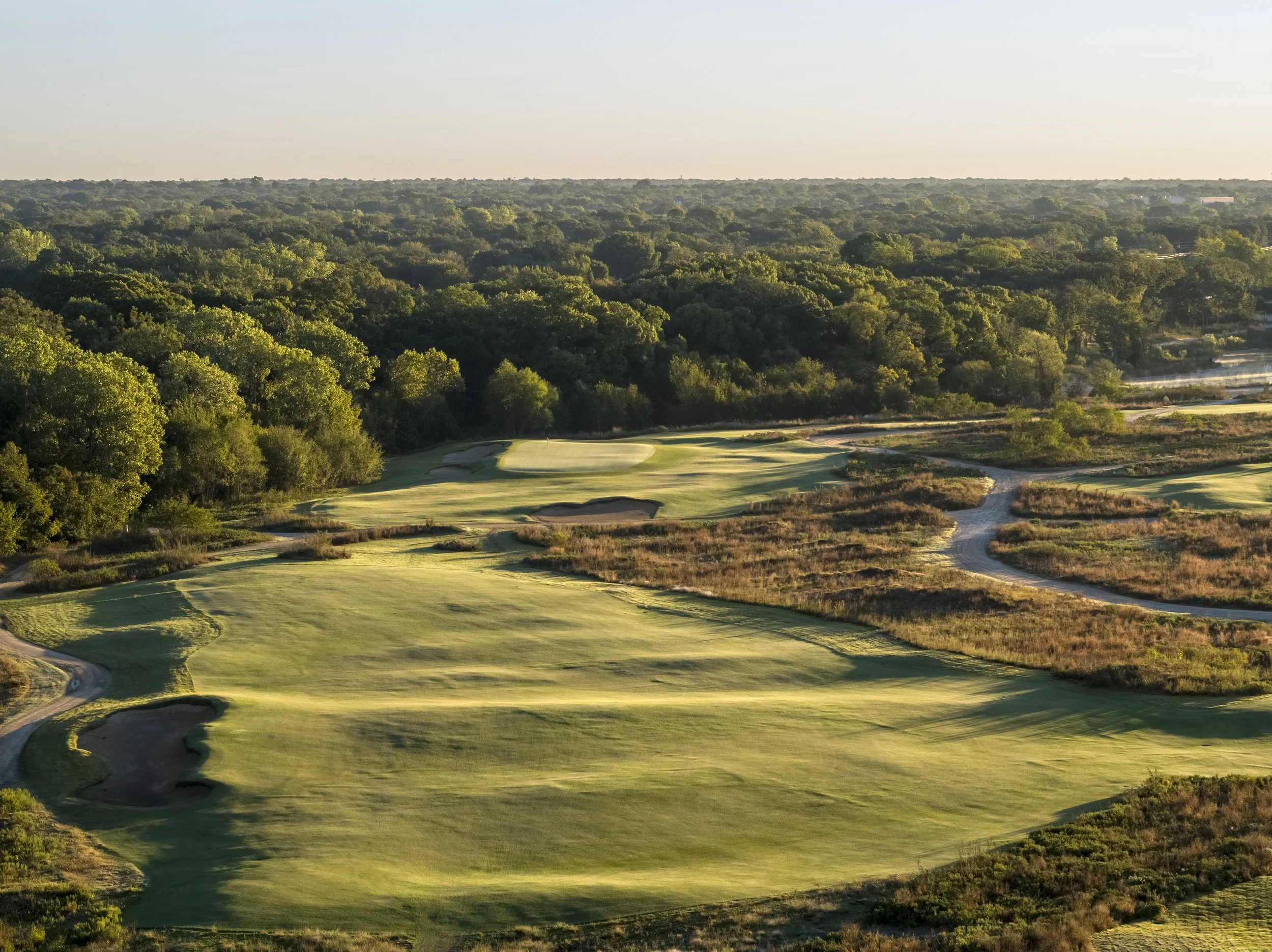
Defined by its strategy, Trinity Forest is a course that requires thought. Off the tee, although the fairways are wide—70 to 100 yards on some holes—Coore and Crenshaw force players to make a decision. For example, on the Par-4 4th, the left side of the fairway yields a shorter approach with a better angle to the green, but it also slopes away toward the property line.
“For every yard right off the aggressive left line, a player’s approach shot becomes more difficult,” said Brice Lombard, Assistant Golf Professional at Trinity Forest Golf Club.
On the Par-4 12th, a cross bunker presents players with the question of whether to play short, left, or over it off the tee, as does the Par-4 15th with its two centerline bunkers.
“It’s the type of golf course where, on the tee, Coore and Crenshaw ask you where you want to be on your second shot,” said Kauff.
From the fairway, firm and perched green complexes—as the landfill limited the duo’s ability to dig into the ground—make precise iron shots a necessity. Though misses leave tricky recovery shots, players have a variety of options. With Trinity Forest being the first course in the nation to be grassed wall-to-wall (everywhere but the greens) with a variety of Zoysiagrass formerly known as L1F, now called “Trinity Zoysia,” a fitting nod to its origins, players can bump a gap wedge—or even a lower-lofted club, such as a 7-iron—along the ground, try to flop a lob wedge to the pin, or putt.
In both cases—off the tee and on some approaches—players are required to aim away from the hole, utilizing the contours to get it close, as is the case on the Par-4 14th, where, though drivable, players must aim right over the bunker, and on the Par-4 18th, where, from the fairway, the ideal approach is short right.
“If you aim for the pin off the tee on Hole 14, it’ll result in a chip from the left that could very easily come back to your feet,” said Kauff. “If you aim for the pin on the approach on Hole 18, it’ll likely kick off the back of the green.”
The green complexes are no different, requiring thought. With Holes 2 and 12 sharing a 36,000-square-foot double green, the average green size is 13,500 square feet. Given their scale, two-putts are difficult to come by. In fact, in 2019—the last year Trinity Forest hosted the AT&T Byron Nelson (now THE CJ CUP Byron Nelson)—the course recorded the most three-putt greens while also producing the most greens in regulation.
“The green complexes require a great deal of thought given their variety,” Lombard.
Par-3s:
The Par-3s perfectly exemplify the design principles present throughout the course. On the front nine, Hole 3, to a front pin, requires players to use the contours to the right, while Hole 8, to a back pin, demands a shot played short to utilize the Biarritz-like swale—flying it directly to the pin risks the ball kicking off the back of the green. On the back nine, Hole 11 features one of the course’s perched greens, with tightly mown runoffs in every direction, while Hole 17 features a double punchbowl green that sits seamlessly within the land.
“We have eighteen really good golf holes. Because of that, the Par-3s don’t always receive the credit they deserve, but each offers variety in distance, demanding strategy and presenting multiple options,” said Kauff.
