
OCM: Medinah Country Club: No. 3 and Much More
Alex Elias
Courtesy of Will Watt (Contours)
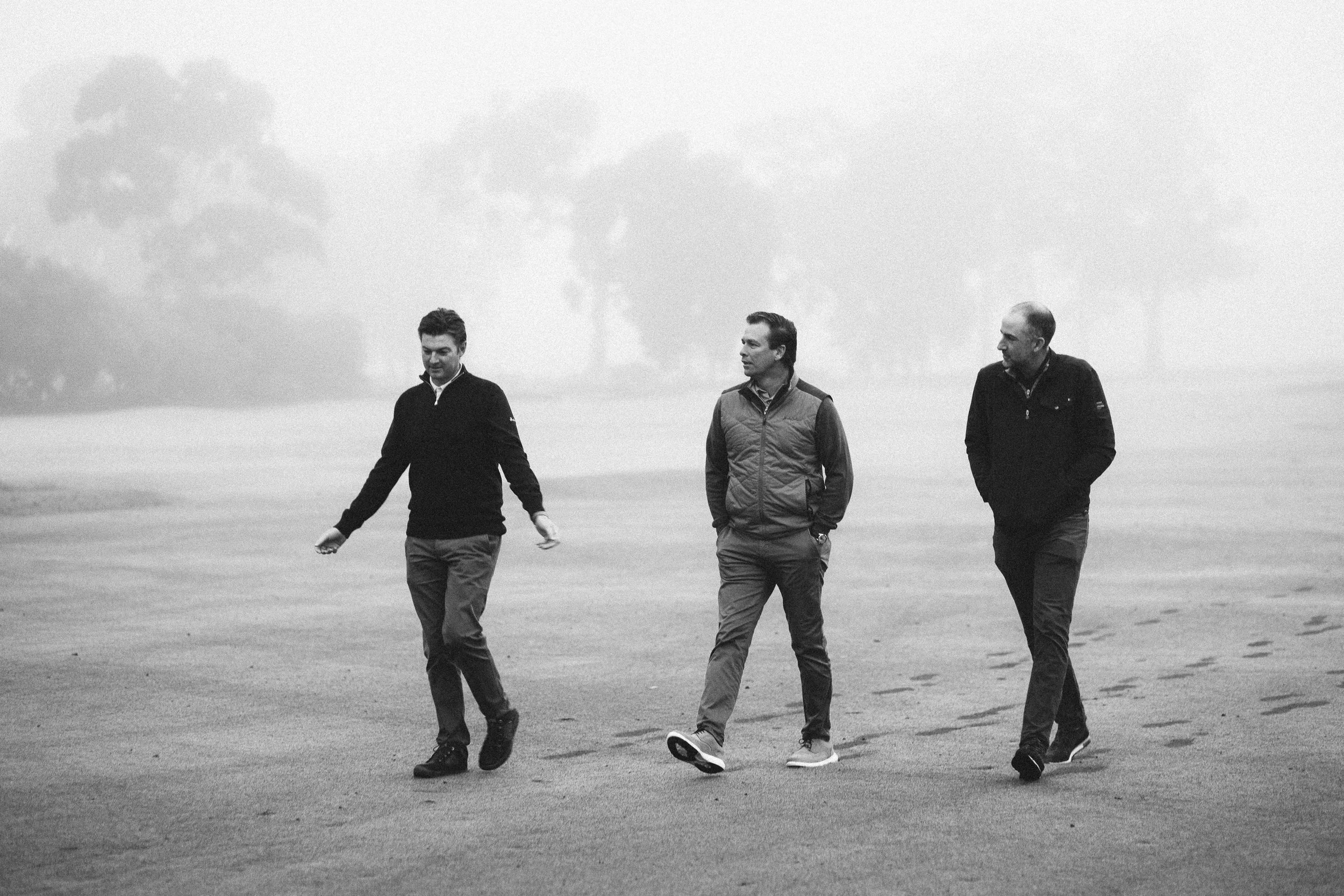
In recent years, Australian design firm OCM (Geoff Ogilvy, Mike Cocking and Ashley Mead)—best known for their work at Kingston Heath Golf Club and Peninsula Kingswood Country Golf Club—has expanded their reach into the United States.
Courtesy of Capture Film Co.
Medinah Country Club: No. 3
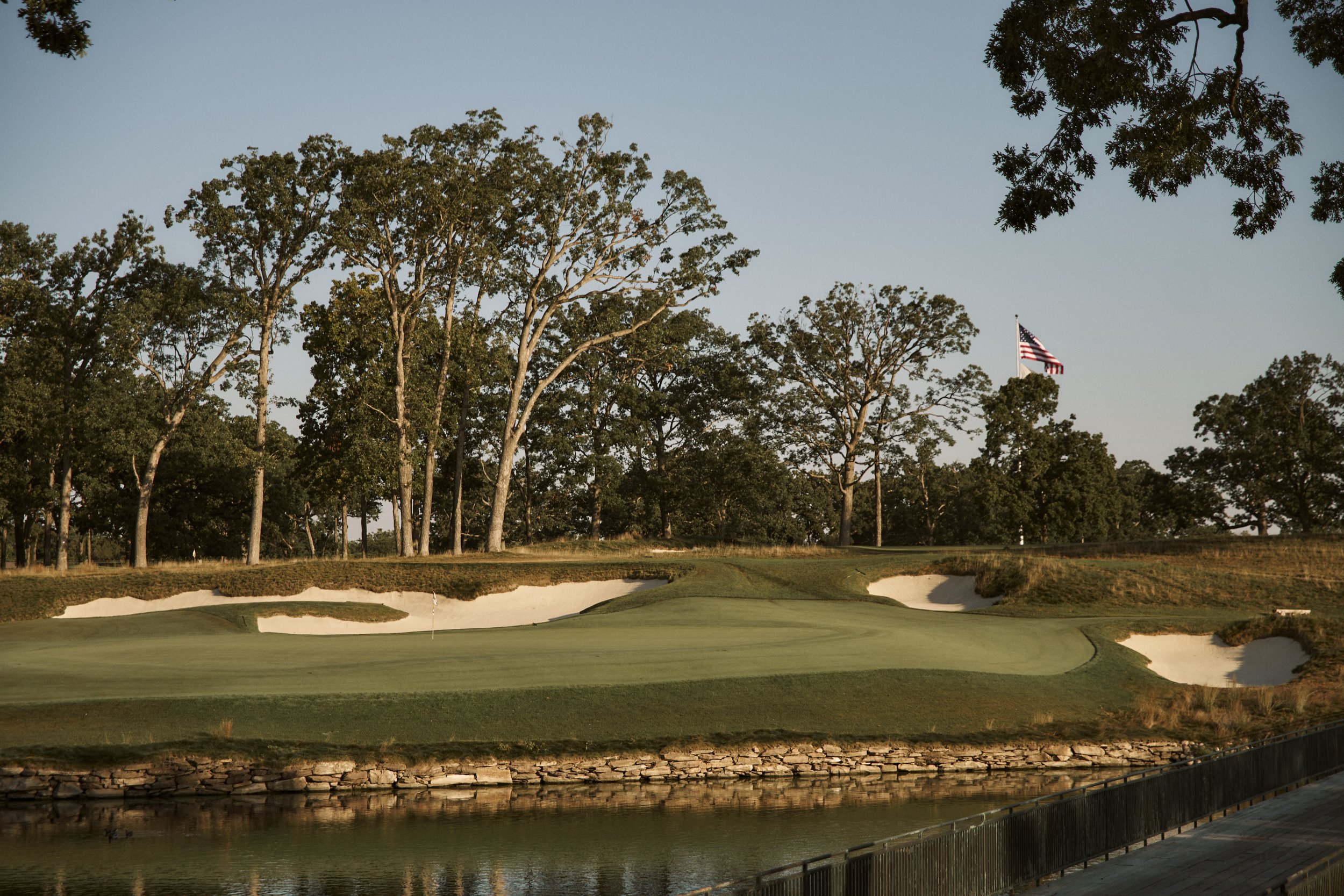
Originally designed by Tom Bendelow, and redesigned by OCM, Holes 5 and 6 were shifted left to abut an out-of-bounds fence, two of the Par-3s that played directly over Lake Kadijah were removed, and, most significantly, the last six holes were replaced and rerouted with new ones—the drivable Par-4 16th playing diagonally across the lake and the Par-3 17th crossing back in the opposite direction.
Courtesy of Medinah Country Club & Nick Novelli Photography
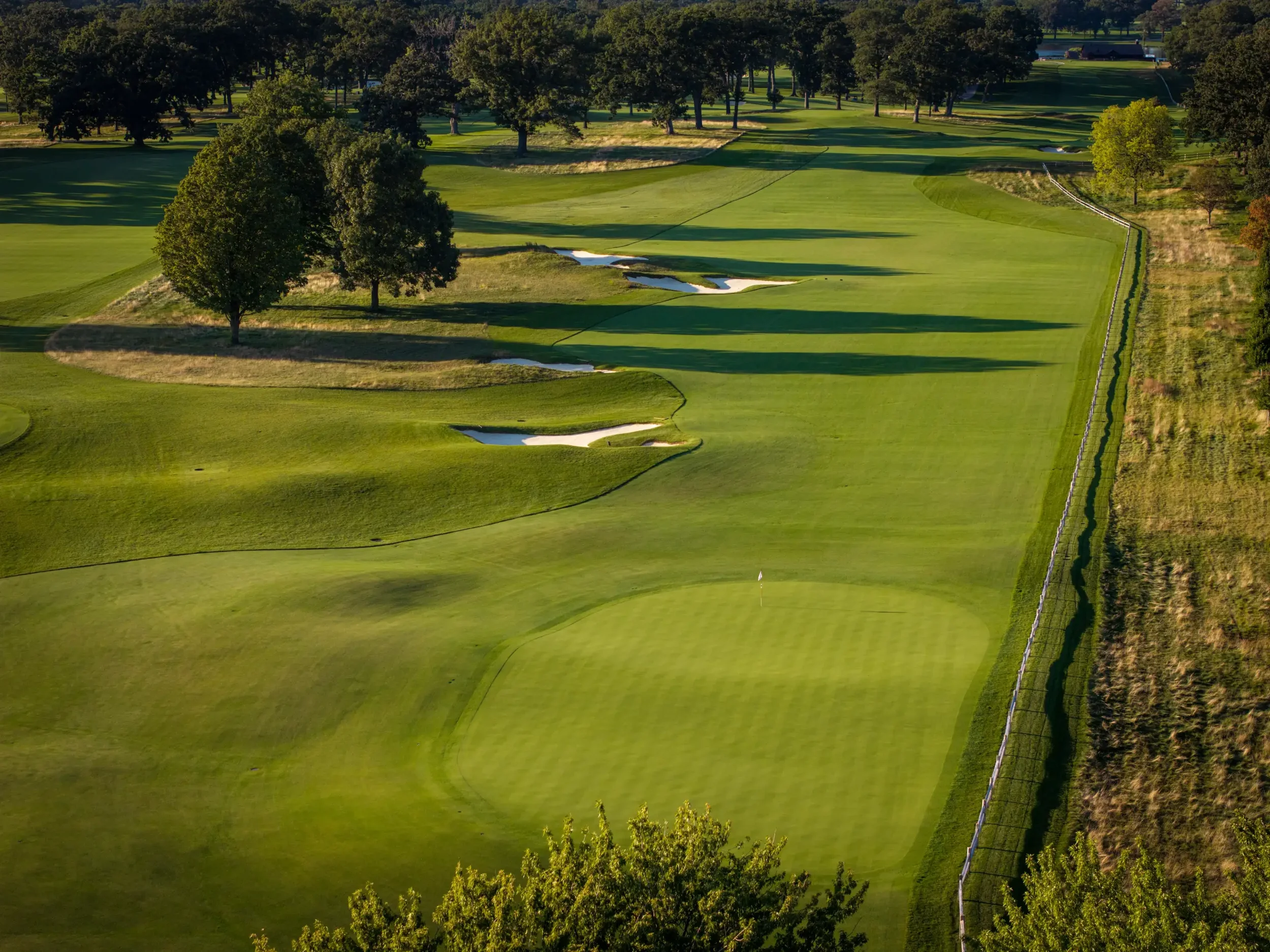
Hole 6 - Par-4 - 476: With a split-rail fence running along the entire left side of No. 6, players who challenge the OB fence are rewarded with a better angle. Those who play it safe to the right are faced with the fence on the approach.
“The fence was inspired by an old black-and-white photo from the 1930s which showed a boundary fence very close to the current 5th green. The 5th, 6th and 7th all played close to the boundary, and we were fortunate to have space to the right to realign each hole, which in turn allowed us to plant out the boundary and hopefully, in time, screen the road and houses. The question then became, how do we create interest? The photo triggered a thought about reinstating the concept of a boundary fence. It’s not really an internal OOB, but rather we were shifting the boundary line in a little,” said Cocking.
Reinstated, Hole 6 is now one of the most strategic holes on the course.
“We’ve all played a lot in the UK, and that type of concept is not uncommon by any means—St. Andrews, Royal St. George’s, Prestwick, Troon and so on,” said Cocking. “That part of the course is a little bland—it doesn’t have the trees, contour or lake that the rest of the property enjoys. The idea of a fence creating interest to this corner really intrigued us, and fortunately the club were also very supportive. We’re incredibly pleased with how the three holes turned out—especially No. 6.”
Hole 16 - Par-4 - 402: Playing diagonally across the lake, the short Par-4 16th (Hole 12 in the Presidents Cup) invites players to take on as much risk in order to shorten the hole.
“The three Par-3s felt very similar to one another—particularly 13 and 17, playing across the water in the same direction,” said Cocking. “Standing on the old 17th, we kept looking down the line of the water and saw a wonderful-looking Cape-style short Par-4, which we felt could be spectacular, as they didn’t really feature a great short 4.”
Courtesy of Jeff Bertch
The Fall Line
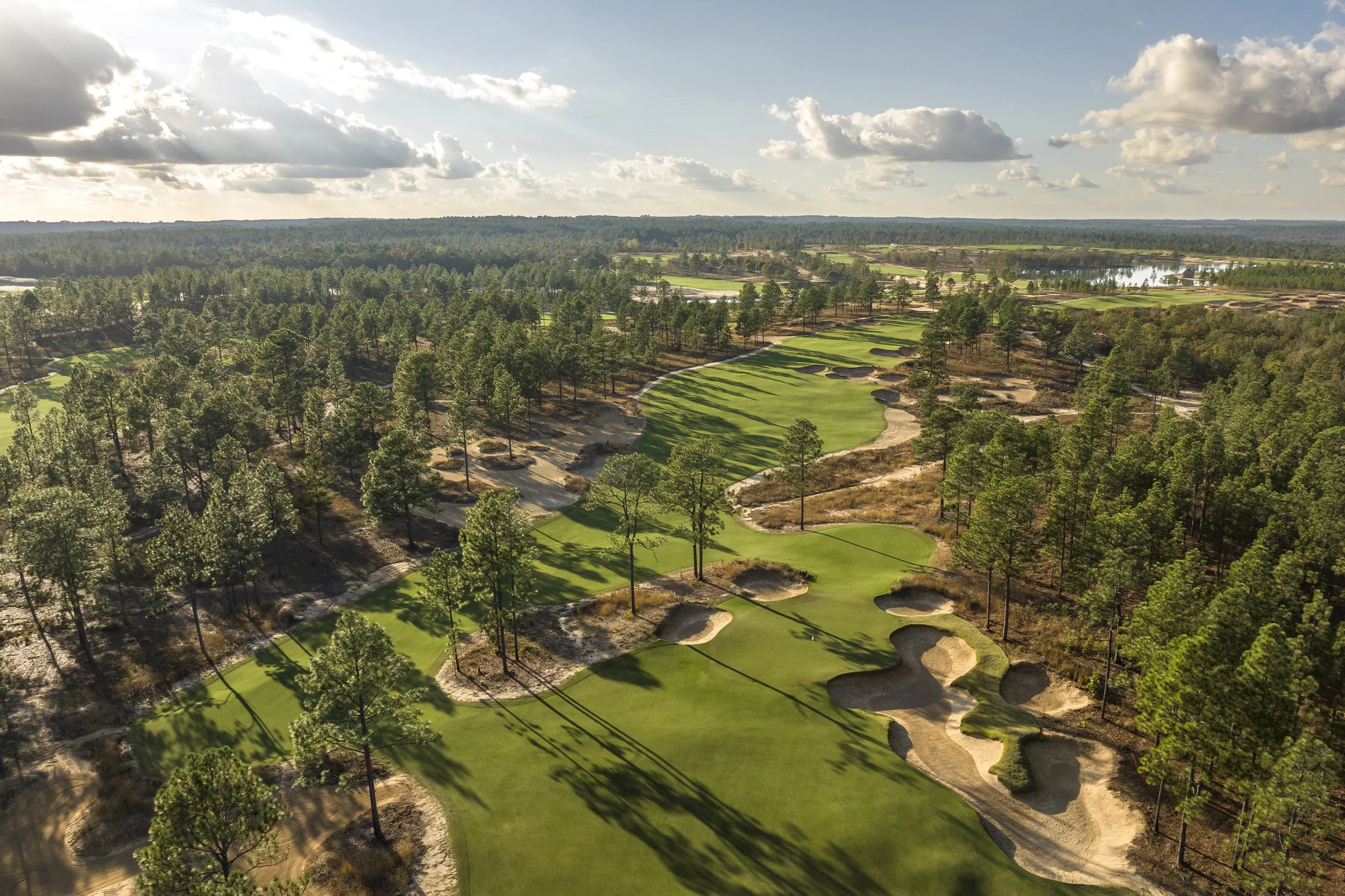
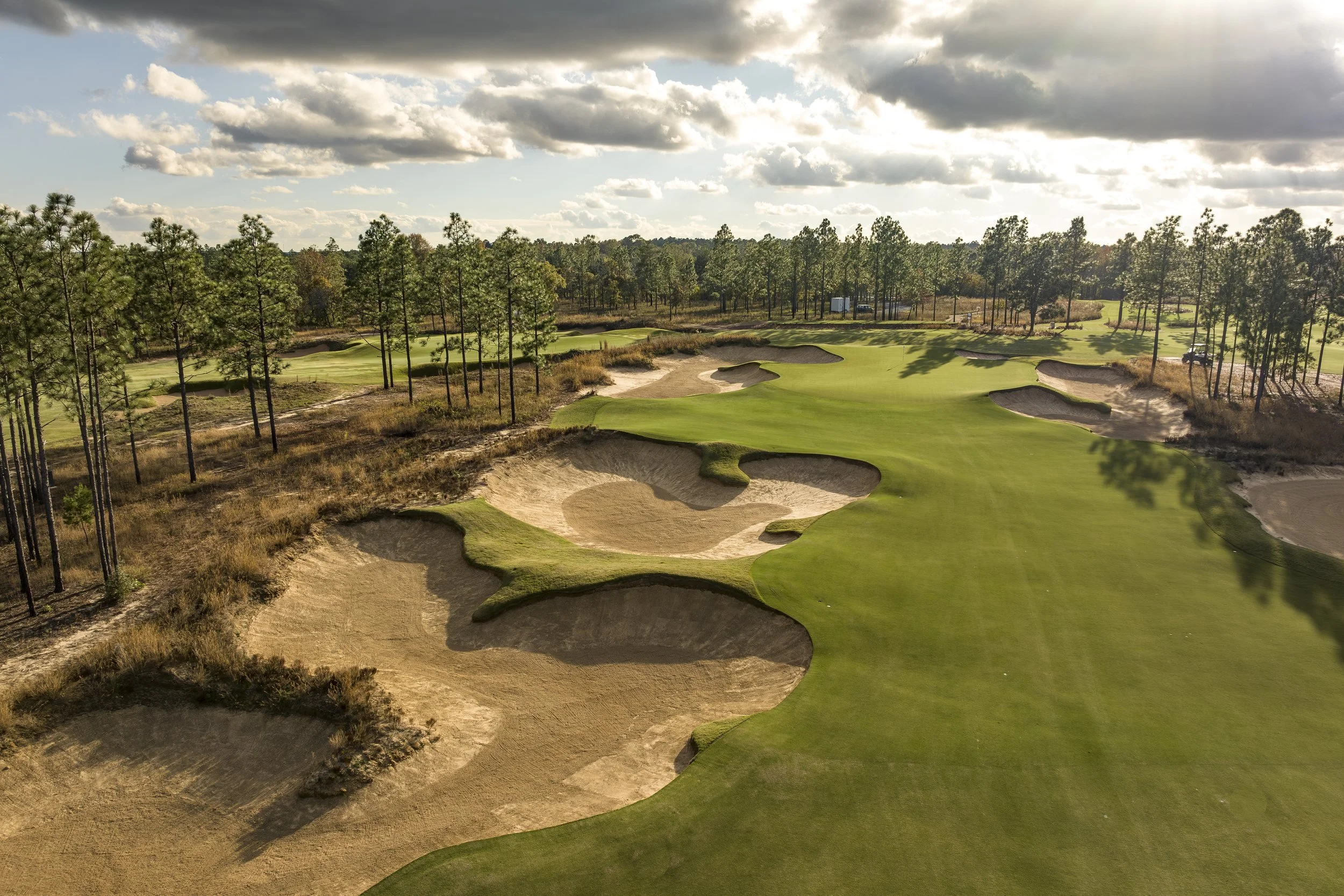
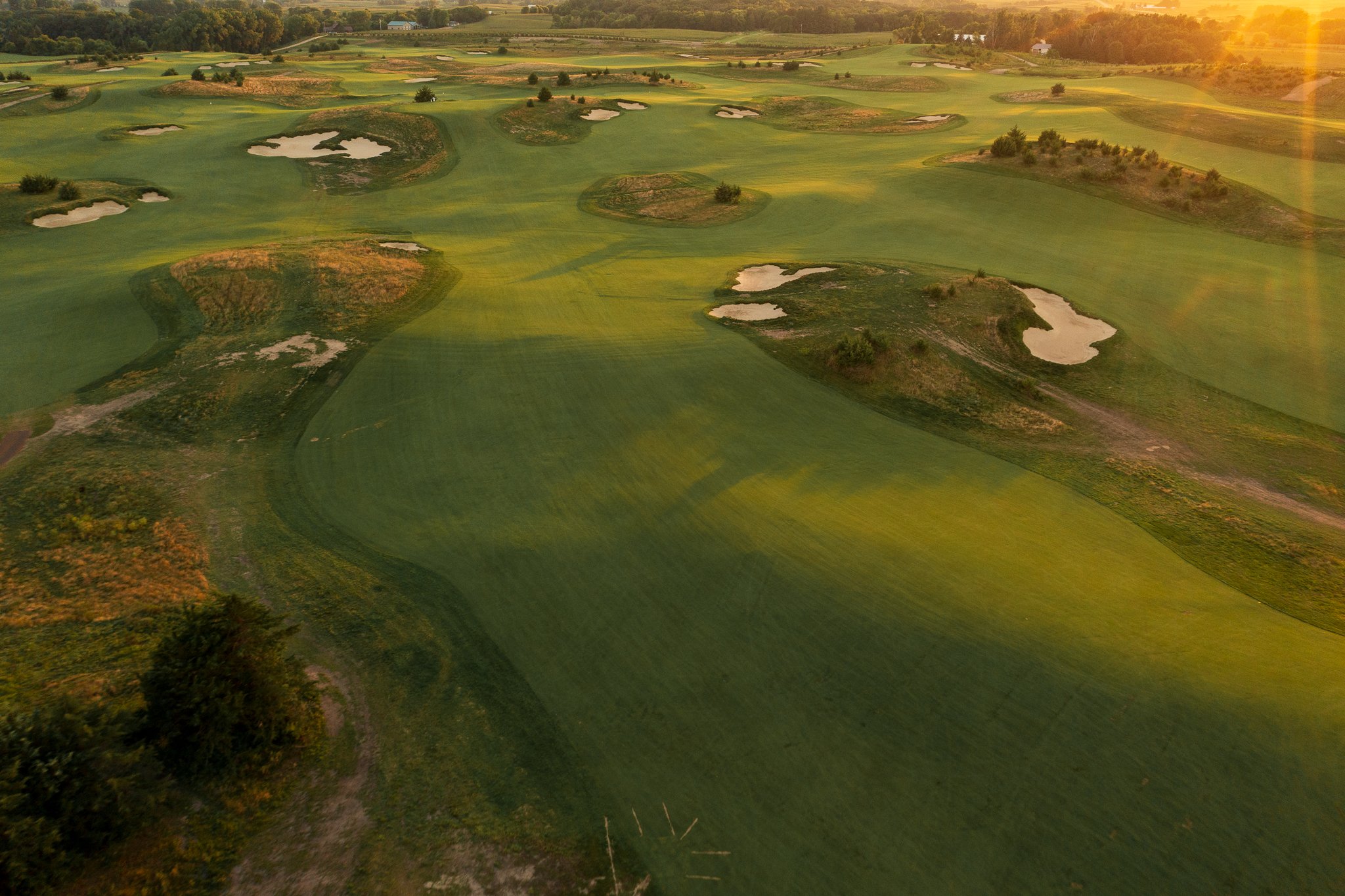
A 36-hole private destination, OCM designed two complementary courses, one drawing inspiration from British heathland courses and the other from Australian Sandbelt courses.
“The Fall Line started as an 18-hole project, but it’s a huge tract of land—we had 1,500 acres to play with, and the client was keen to see more golf,” said Mike Cocking. “It expanded to 27 holes, and we actually stayed with that as a concept for quite some time, but before long it expanded to 36 holes. When that occurred, the decision about the style of the two courses was discussed. We could build all 36 holes in a similar style, much like many of the old 36-hole venues such as Winged Foot, Royal Melbourne or Sunningdale. This might have also allowed for a composite design. Or, we could go with two different styles. There were sections of the property that reminded us of the Sandbelt at home or maybe even Pine Valley, and other pockets that felt a bit like the heathland. We ended up pitching that as an idea, and the client loved it. Aside from style differences, the Sandbelt course is a much sterner test at around 7,400 yards from the tips, while the heathland course is around 6,600 yards and at a Par of 70.”
Routed through the native scrub pine and into a highland meadow, the heathland-inspired East—modest in length—features six Par-3s, with no repeating pars until Nos. 12 and 13, both Par-4s. The Sandbelt-inspired West’s putting surfaces extend right to the edges of the surrounding bunkers, with the course playing firm and fast.
Courtesy of Capture Film Co.
Tepetonka
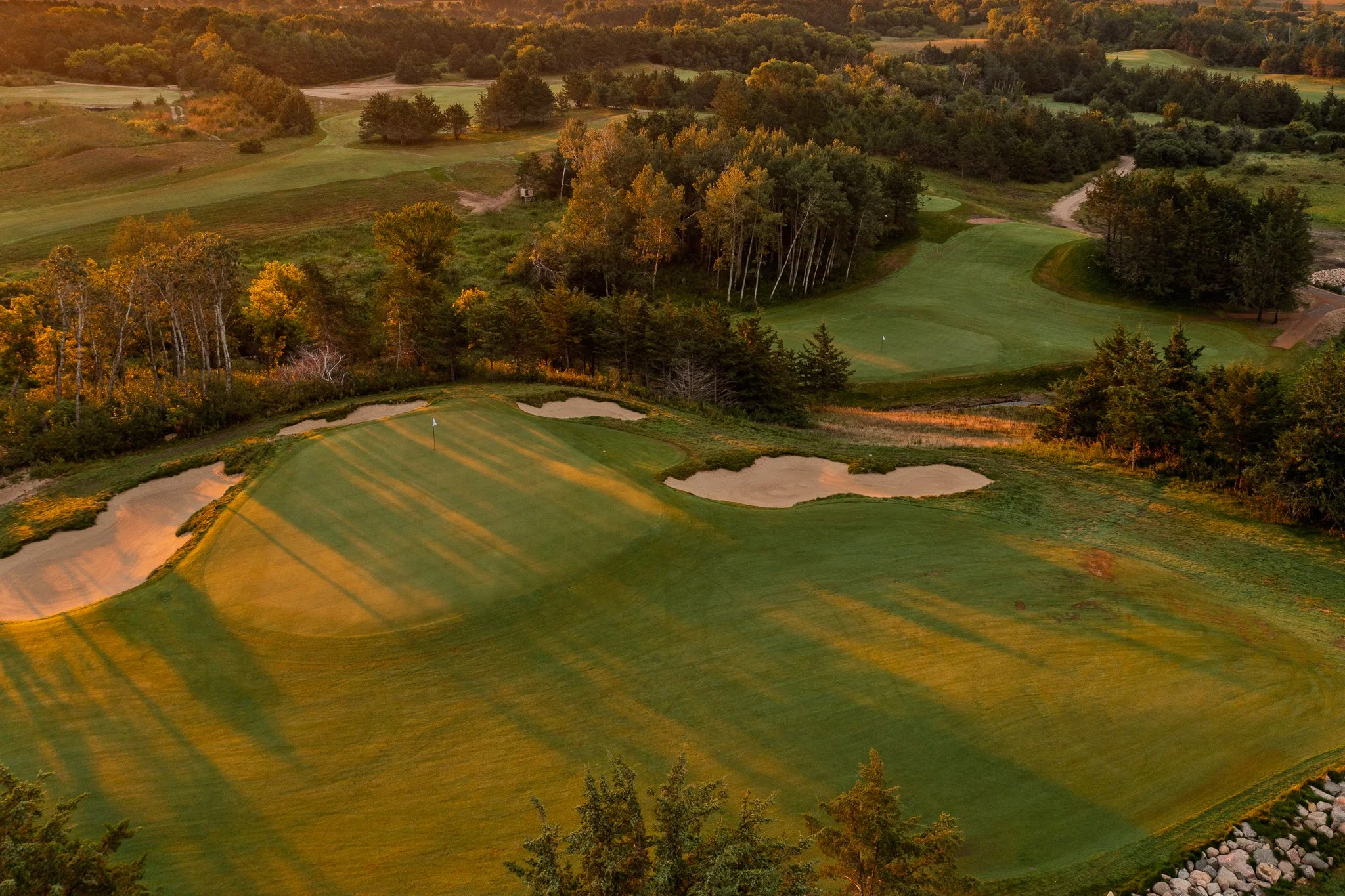
OCM’s latest design, Tepetonka is a private golf destination located just 90 minutes from the Twin Cities. The vision of Mark Haugejorde, recently described by Jim Nantz, design consultant for Tepetonka, as “The Minnesota Masterpiece,” the course is laid out over two parcels of land, totaling around 250 acres and split by the Shakopee River.
“We spent quite a lot of time working on routing Tepetonka. We had a few different options on paper when we first visited in April of 2022, but they didn’t quite work,” said Cocking. “Ashley and I ended up starting again, and one morning the pieces just kind of fell into place, and the routing was almost a combination of our two efforts. It’s a wonderful property with 40- to 50-foot dunes which you can play through or across, and then a wonderful ravine and creek which cuts through a 1/3 of the property. We were especially pleased with how the golfer really embarks on a journey through different landscapes, constantly returning to the ravine and creek and the open prairie throughout the round. We originally thought the creek might be in play on just a few holes, but in the end it’s a feature on the 1st, 3rd, 4th, 12th, 14th, 15th, 16th and 18th. To be quite honest, I think it’s the best routing we’ve ever done.”
Courtesy of Mike Cocking
The Stanwich Club
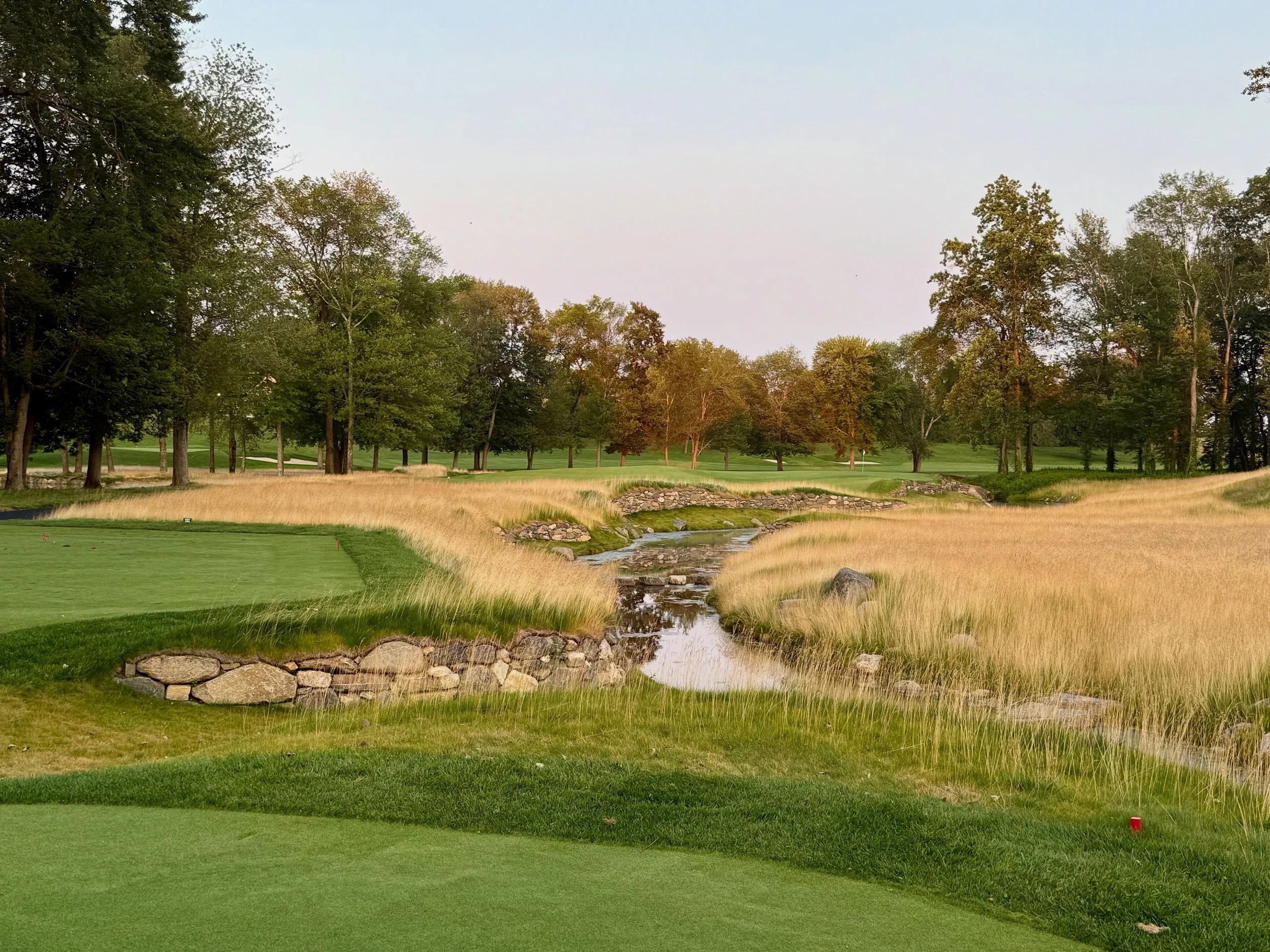
Originally designed by the father and son team of William and David Gordon, The Stanwich Club appointed OCM as the consultant architects in late 2022. As OCM has created a full Masterplan for the course, their first work included the redesign of two Par-3s on the main course—the 8th and 16th. The latter with a creek-line running the length of the hole.
“The old 16th played in a beautiful section of the course with a creek running down the right of the hole. The issue was the creek really looked more like an engineered drain, with straight lines and sharp sides, without any of the character you would expect for a creek running through the hills of Greenwich, Connecticut,” said Cocking.
As a result, part of redesign included adding some rockwork.
“The hole was also incredibly hard,” said Cocking. “The old green was perched up with very deep bunkers and hollows on one side and the creek on the other. Up-and-downs were almost impossible, and many golfers just ended up going back and forth between the creek and the hollows or bunker.”
By replacing the bunkers with short grass, the hole now allows players to feed the ball off the tee and have a variety of options for recovery shots around the green.
“We built a mound on the left side so the average golfer can hit a running shot left of the green and potentially catch a slope to finish on or close to the putting surface. There are plenty of friendly pins on the left side, but anything in the back right of the green requires a great iron shot,” said Cocking. “Short grass and more subtle contours surround the green, offering all sorts of recovery shots—everything from a putt or bump and run through to a high lob.”
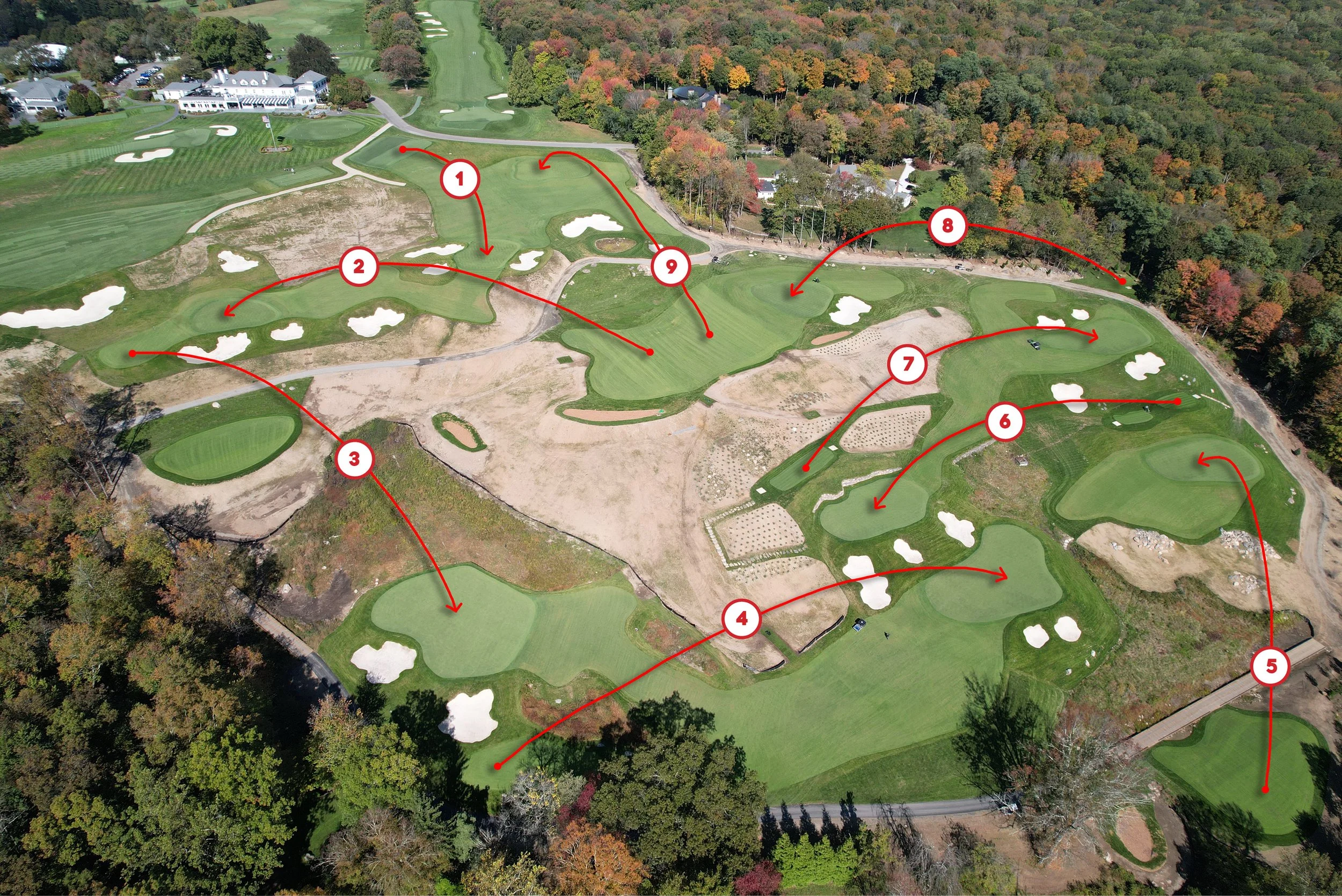
Recently opened, The Stanwich Club’s 9-hole short course, affectionately referred to as “The Cauldron,” was designed by OCM.
